
The core challenge in using recycled PET to manufacture flame-retardant non-woven fabrics is how to successfully integrate the two high demand characteristics of “regeneration” and “flame retardancy” in complex processes. This is not just about adding flame retardants to materials, but involves the collaborative challenge of the entire chain from the molecular level to the final product.
The main challenges
The specific manifestations and difficulties of challenge dimensions and their impact on flame-retardant non-woven fabrics
Inherent defects in material properties
1. Molecular chain degradation: After multiple processing, the molecular chains of recycled PET break and the intrinsic viscosity (IV value) decreases. This leads to poor melt strength, making it difficult to form a uniform and strong fiber web in non-woven fabric processing (such as spunbond and meltblown). The physical properties (strength, uniformity) of the base fabric are insufficient, which affects durability and subsequent processing.
2. Complex impurities and pollutants: In addition to visible impurities, the more challenging aspect is the “unintentional additives” (NIAS) from inks, adhesives, and other plastics, which have complex compositions. Pollutants may decompose during high-temperature processing, catalyze PET degradation, or undergo unpredictable reactions with flame retardant systems, interfering with flame retardant effects.
3. Poor compatibility of flame retardant systems requires the addition of a higher proportion (such as 6-10 wt%) of flame retardants to achieve effective flame retardant levels, which may further deteriorate fiber spinnability and be costly.
The adaptation challenge of processing technology
1. Thermal history sensitivity: Recycled PET has undergone at least one processing and is more sensitive to the temperature and shear force of further processing, making it more prone to thermal oxidation degradation. The processing window is narrow, the process control is difficult, and problems such as fiber breakage, uneven crystallization, and clogging of the spinneret are prone to occur.
2. Difficulty in dispersing high content flame retardants. Uneven dispersion of flame retardants in the melt can lead to local flame retardant failure of non-woven fabrics, or affect their appearance and feel.
Consistency between product quality and safety
1. Poor batch stability: Recycled PET raw materials come from complex sources, and the degree of degradation, types of impurities, and colors (such as colorants) of each batch of materials may vary. It is difficult to ensure consistency in color, strength, and flame retardant rating among different batches of non-woven fabric products, which affects downstream customers’ use.
2. High safety evaluation requirements: As the final product (especially clothing and home textiles), it is necessary to conduct strict safety assessments on the chemical substances in the fibers (including flame retardants and potentially migrating NIAS). Increase testing costs and compliance risks. Relevant national standards, such as the Safety Evaluation of Recycled Polyester (PET) Fiber, have put forward requirements for this.
Cost and market acceptance
1. High overall cost: High quality recycled PET slices, specialized flame retardants, and complex modification processes (such as using chain extenders to repair molecular chains) all drive up costs. The finished product price may be much higher than ordinary non-woven fabrics, and even close to or exceed the cost of using native flame-retardant polyester, weakening market competitiveness.
2. The trade-off between green and performance: If chemical additives are excessively added or controversial flame retardant systems are used in pursuit of performance, it may go against the original intention of “environmental protection” and affect orders with green procurement requirements.
Key technology breakthrough ideas
In response to the above challenges, current research and industrial practice mainly focus on the following directions:
Raw material refinement and molecular repair: Purification of raw materials through deep cleaning and efficient separation techniques. Before or during processing, chain extenders (such as epoxy compounds) are used for reactive extrusion to repair broken molecular chains, improve melt strength and processability.
Development of efficient and environmentally friendly flame retardant system: Research and develop environmentally friendly phosphorus and nitrogen flame retardants with better compatibility with recycled PET. Explore nanocomposite flame retardant technologies (such as layered silicates) to achieve better flame retardant effects and smaller performance impacts with lower addition amounts.
Functional integration processing technology: The flame retardant is made into high concentration and high dispersibility specialized masterbatch using the masterbatch method to improve its dispersibility during the spinning process. Optimize the integrated process flow from “bottle flakes → flame retardant masterbatch → spinning → mesh formation” to reduce thermal history and improve efficiency.
Development Suggestions
If you want to promote the research and development or production of such products, you can start from the following aspects:
Precise market positioning: Initially, it can target high-end markets that are relatively insensitive to price but have strict requirements for environmental protection, such as branded outdoor products that specify the use of recycled materials, sustainable office and home products, etc.
Establish a stable supply chain: Establish cooperation with reliable suppliers of recycled PET raw materials, prioritize the use of raw materials with relatively single sources (such as 100% transparent bottle flakes) and quality traceability systems, and control stability from the source.
Phased verification: first overcome the challenge of “producing qualified flame-retardant recycled PET fibers”, and then solve the process problem of “processing fibers into non-woven fabrics with stable performance”. Each step requires strict testing of flame retardant performance (such as limit oxygen index LOI, vertical combustion test) and physical properties.
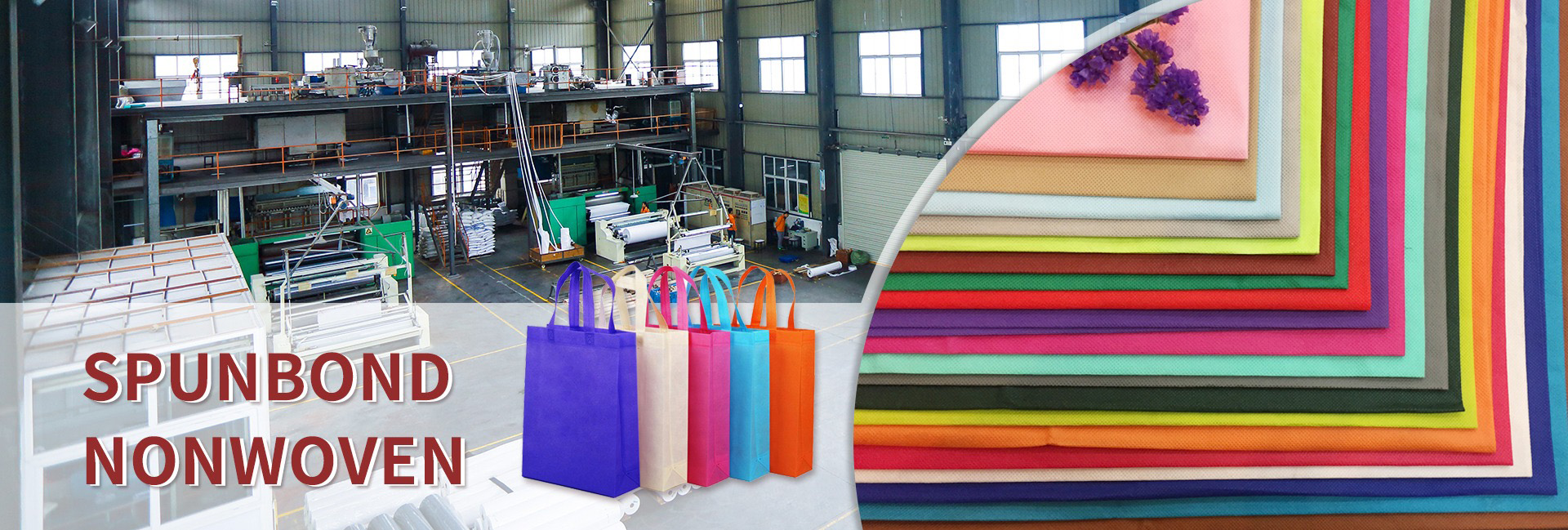
Dongguan Liansheng Non woven Technology Co., Ltd. was established in May 2020. It is a large-scale non-woven fabric production enterprise integrating research and development, production, and sales. It can produce various colors of PP spunbond non-woven fabrics with a width of less than 3.2 meters from 9 grams to 300 grams.
Post time: Dec-11-2025