
The core difficulty of PLA fiber preparation process
1. Polymerization stage
The purification and molecular weight regulation of lactide are challenging. PLA polymerization relies on high-purity lactide (≥99.5%), but impurities such as lactic acid dimers and oligomers are easily generated during the dehydration and cyclization of lactic acid. Moreover, these impurities have similar boiling points to lactide, making it difficult to separate them completely through conventional distillation. This can lead to unstable polymerization reactions and affect the uniformity of resin molecular weight. Additionally, the amount of catalyst used and the reaction temperature gradient in ring-opening polymerization need to be precisely controlled. Otherwise, problems such as excessively wide molecular weight distribution (affecting fiber strength) or insufficient polymerization degree may occur. Traditional processes struggle to balance efficiency and quality.
2. Spinning Stage
The compatibility between thermal stability and crystallization properties poses challenges for PLA. The thermal decomposition temperature of PLA (approximately 230°C) overlaps with the melting spinning temperature range (210-230°C), leading to thermal degradation during spinning and resulting in defects such as broken fibers and fuzzy fibers. Additionally, the slow crystallization rate of PLA makes it difficult to control the crystallinity during the spinning cooling process. If the crystallinity is too low, it can lead to poor fiber strength and high boiling water shrinkage rate; if it is too high, it can reduce the flexibility and toughness of the fibers, making them unsuitable for subsequent processes such as stretching and hot rolling in nonwoven fabric processing.
3.Modification and process adaptation are challenging
Pure PLA fibers exhibit defects such as high brittleness and insufficient heat resistance (low heat distortion temperature), necessitating performance optimization through modifications such as blending and filling. However, the compatibility of modifiers with PLA is difficult to control, often resulting in uneven dispersion and deteriorating fiber properties. Furthermore, different application scenarios (such as medical and agricultural) have significantly varying requirements for fiber properties, necessitating targeted adjustments to the spinning process. This makes it challenging to balance large-scale production with customized demands.
The core method of molecular weight control in PLA polymerization stage
1. Precise control of raw material purity
The purity of lactide directly determines the stability of polymerization, and it needs to be purified to above 99.5% through techniques such as molecular distillation to remove impurities such as lactic acid dimers and oligomers, avoiding interference with the polymerization reaction and widening the molecular weight distribution caused by impurities. Simultaneously controlling the purity of lactic acid raw materials, reducing the hindrance of impurities on the growth of polymerization chains, and laying the foundation for molecular weight uniformity.
2. Catalyst regulation
Select efficient catalysts such as stannous octoate and aluminum complexes, and strictly control the catalyst dosage (usually 0.01% -0.1% of the monomer mass): too little dosage can lead to slow polymerization rate and insufficient molecular weight; Excessive dosage can easily cause side reactions and disrupt the uniformity of molecular weight. Composite catalysts can be used in some scenarios to balance polymerization efficiency and molecular weight control.
3. Optimization of reaction conditions
Temperature: Adopt a gradient heating of 120-180 ℃ to avoid PLA degradation caused by high temperature, while low temperature will reduce polymerization rate and affect molecular weight increase;
Time: Control the polymerization reaction cycle, balance molecular weight and production efficiency. Too long can easily cause chain breakage, while too short can lead to insufficient polymerization;
System: Inert gases (nitrogen, argon) are used for protection, isolating oxygen to prevent oxidative degradation and damage to molecular chains. At the same time, the moisture content of the system is controlled to reduce chain termination reactions.
4. Molecular weight modification regulation
Chain extension modification: adding diisocyanates and epoxy chain extenders to connect short molecular chains, increase molecular weight, and narrow distribution;
Co polymerization modification: Co polymerization with monomers such as caprolactone and glycolide, adjusting the copolymerization ratio to flexibly control the molecular weight and distribution, while improving the properties of PLA.
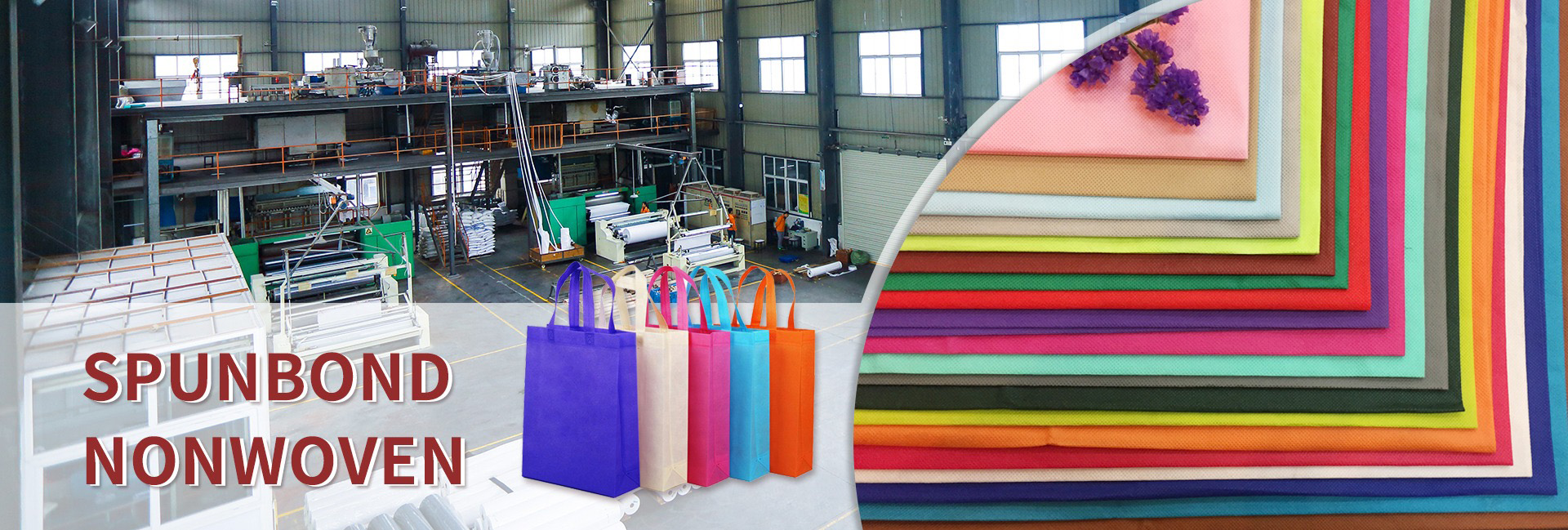
Dongguan Liansheng Non woven Technology Co., Ltd. was established in May 2020. It is a large-scale non-woven fabric production enterprise integrating research and development, production, and sales. It can produce various colors of PP spunbond non-woven fabrics with a width of less than 3.2 meters from 9 grams to 300 grams.
Post time: Feb-18-2026