
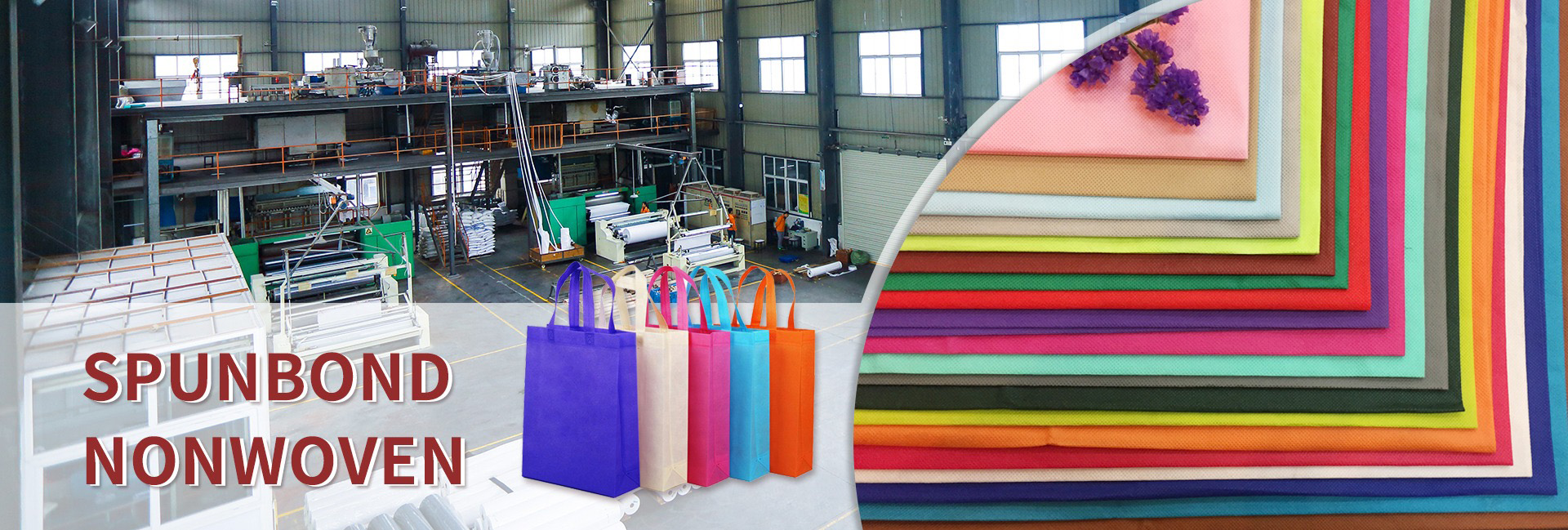
When it comes to PP non-woven fabric, everyone is familiar with it – it can be found in medical masks, shopping bags, agricultural weed proof fabrics, and car interiors. But many people don’t know that PP non-woven fabric is not a one size fits all solution. It comes in various types such as spunbond, meltblown, SMS, etc., each with its own unique skills that are suitable for different application scenarios.
Some people wonder: why can some PP non-woven fabrics be used as mask filter layers, while others can only be used as shopping bags? The key lies in the differences in production processes. Today, we will talk about the “eighteen martial arts” of PP non-woven fabric at once, dismantling the core differences between spunbond, meltblown, and SMS. After reading, you will no longer be confused.
spunbond PP non-woven fabric (SS)
Spunbond PP non-woven fabric is the most common and widely used basic type of PP non-woven fabric, and it is also the type of PP non-woven fabric that many people come into contact with the most. It is usually labeled as “SS” (double spunbond layer). It is like the “all-around player” in the PP non-woven fabric family, with high cost-effectiveness and wide applications, supporting half of the PP non-woven fabric market.
From the perspective of technology, the core of spunbond is “melt drawing, mesh laying and consolidation”, which is consistent with the basic process of PP non-woven fabric we previously explored, but pays more attention to the strength and toughness of the fibers. Specifically, PP particles are heated and melted, and continuous filaments are sprayed out through a spinneret. After being cooled and stretched by cold air, they are randomly laid into a fiber web, which is then pressed together at high temperatures by a hot rolling machine to bond the fibers together and form a shape.
Its core characteristics are very prominent: high strength, good toughness, breathable and waterproof, and high production efficiency and low cost. It can be made into both lightweight fabrics and thick wear-resistant materials. For example, the environmentally friendly shopping bags, furniture dust covers, agricultural grass proof fabrics, inner and outer layers of masks that we use in our daily lives, as well as the interior lining of cars and disposable bed covers, are almost all made of spunbond PP non-woven fabric.
It should be noted that the filtration performance of spunbond non-woven fabric is generally average, so it is rarely used as the core filtration layer of masks. It is more responsible for the basic functions of “support, protection, and isolation”. Moreover, depending on the number of layers, there are also subdivided types such as SS (double spun bond) and SSS (triple spun bond). The more layers there are, the higher the strength and thickness, making it suitable for thicker application scenarios, such as industrial packaging fabrics.
Melt blown PP non-woven fabric (M)
If spunbond is an “all-around player”, then melt blown PP non-woven fabric is the “filtration king” in the PP non-woven fabric family, and also the core material of medical masks and protective equipment, labeled as “M”. Its core advantage is “ultra-fine fibers and efficient filtration”, which can block small particles, which spunbond non-woven fabric cannot replace.
The process of meltblown and spunbond has similarities, but the core difference lies in the “spinning” and “stretching” stages. Similarly, PP particles are melted, but the aperture of the meltblown spinneret is finer (only 0.1-0.2 millimeters), and “high-temperature high-speed airflow drawing” is used – the melted PP melt is instantly blown and stretched by the high-speed hot air flow at 300-400 ℃ after being sprayed from the spinneret, forming ultrafine short fibers with a diameter of only 0.5-5 microns (several tens of times thinner than human hair).
These ultrafine fibers are randomly laid out into a network, with extremely small gaps between the fibers, forming a dense filter layer, which is then solidified and formed through its own adhesive force (without the need for hot rolling). This structure gives meltblown non-woven fabric ultra-high filtration efficiency and good barrier properties, which can effectively filter small particles such as droplets, dust, bacteria, etc. The filtration efficiency can reach over 95% (commonly known as 95 level and 99 level meltblown fabrics).
However, it also has its shortcomings: low strength, poor toughness, easy to break with a light pull, and not waterproof, so it is rarely used alone. Its core application scenario is “filtering”, such as the middle filter layer of medical masks, the core barrier layer of protective clothing, the filter cotton of air purifiers, industrial dust filter materials, etc. The masks we usually wear can block virus droplets, and the key lies in this layer of meltblown fabric.
SMS composite PP non-woven fabric
Since spunbond is strong in strength and meltblown is strong in filtration, can we combine the two? Of course! SMS composite PP non-woven fabric is a combination of “spunbond+meltblown+spunbond” (S=spunbond, M=meltblown), equivalent to a strong combination of “all-around player+filtration king”, balancing strength and filtration performance, and is the preferred material for high-end protective equipment.
Its production process is very simple, which is to produce a layer of spunbond non-woven fabric (S) on a production line, then lay a layer of meltblown non-woven fabric (M) in the middle, and finally cover it with another layer of spunbond non-woven fabric (S). The three layers are firmly bonded together through hot rolling process, forming a composite structure of “spinning adhesive+meltblown+spunbond”.
This composite structure gives SMS non-woven fabric the advantages of three aspects: the outer layer of spunbond (S) is responsible for waterproofing, stain resistance, and support, ensuring the strength and toughness of the fabric; Intermediate melt spraying (M) is responsible for efficient filtration, blocking bacteria and small particles; The inner layer of spunbond (S) is responsible for breathability, skin friendliness, and enhancing comfort during use. Moreover, according to the demand, various composite types such as SMMS (spunbond+meltblown+meltblown+spunbond) and SSMMS can be extended. The more layers of meltblown, the stronger the filtration performance.
The application scenarios of SMS non-woven fabric are mainly concentrated in the high-end protection field, such as medical protective clothing, medical surgical gowns, high-end mask outer layers, the surface and bottom layers of baby diapers, sanitary pads, etc. It not only solves the problem of low strength of meltblown fabrics, but also compensates for the shortcomings of poor filtration of spunbond fabrics, making it one of the most cost-effective high-end protective materials currently available.
Other common types of PP non-woven fabrics
In addition to the three mainstream types of spunbond, meltblown, and SMS, PP non-woven fabric also has some “niche but practical” types, each with unique uses. Let’s take a brief look to avoid confusion:
1. Needle punched PP non-woven fabric: Using the “needle punched reinforcement” process, the steel needle of the needle punching machine repeatedly punctures the fiber mesh, causing the fibers to entangle and solidify with each other. It has extremely high strength, wear resistance, and durability, but its breathability is average. It is mainly used in industrial filtration, carpets, geotextiles, sound insulation materials, etc.
2. Hot air PP non-woven fabric: Using the “hot air reinforcement” process, the fiber surface is melted by high-temperature hot air to bond the fibers together. The texture is soft, skin friendly, and breathable, but the strength is low. It is mainly used for baby diapers, wet wipes, cotton pads, disposable towels, etc.
3. Water jet PP non-woven fabric: It uses high-pressure water flow to impact the fiber mesh, causing the fibers to wrap and solidify with each other. It has a soft touch, good breathability, and moisture absorption, similar to traditional fabrics. It is mainly used for wet wipes, facial cleansers, medical dressings, etc.
One table to distinguish all types of PP non-woven fabrics
Many people still get confused after reading it. Here is a table of core differences that you can understand at a glance and no longer have to remember complex processes:
1. Spunbond (SS/SS): high strength, good toughness, high cost-effectiveness, the most versatile, suitable for shopping bags, grass proof fabrics, and inner and outer layers of masks;
2. Melt blown (M): Strong filtration, good barrier properties, low strength, suitable for mask filtration layer and protective clothing core layer;
3. SMS/SMSS: Balancing strength and filtration, preferred for high-end protection, suitable for medical protective clothing and surgical gowns;
4. Acupuncture: wear-resistant, high strength, suitable for industrial filtration and geotextile;
5. Hot air: soft and skin friendly, suitable for diapers and cotton pads;
6. Hydra: Soft, breathable, moisture absorbing, suitable for wet wipes and facial cleansers.
In fact, the “eighteen martial arts” of PP non-woven fabric are essentially achieved through different production processes, changing the fiber shape, thickness, and bonding method to achieve different properties. Having understood these, the next time I see masks, shopping bags, and protective clothing, I can easily distinguish which type of PP non-woven fabric they are using, and I will no longer be confused by “spunbond, meltblown, SMS”.
With the development of technology, PP non-woven fabric is constantly upgrading, with functional types such as antibacterial, flame-retardant, and superhydrophobic, and its application scenarios are also constantly expanding. I believe that in the future, this’ non-woven fabric ‘will continue to enter every aspect of our lives, using its’ eighteen martial arts’ to provide more convenience for our lives.
Dongguan Liansheng Non woven Technology Co., Ltd. was established in May 2020. It is a large-scale non-woven fabric production enterprise integrating research and development, production, and sales. It can produce various colors of PP spunbond non-woven fabrics with a width of less than 3.2 meters from 9 grams to 300 grams.
Post time: May-12-2026