
The characteristics and specifications of the raw materials, as well as the type and proportion of modifiers, directly determine the tear resistance of spunbond nonwoven fabrics by altering the fiber’s inherent toughness and inter-fiber cohesion.
Specific Influence of Raw Material Selection on Tear Resistance
1. Base Material Type: Determines the Basic Toughness of the Fiber
Polypropylene (PP): The mainstream base material for conventional spunbond nonwoven fabrics. It has high crystallinity but moderate toughness. The longitudinal tear strength of pure PP spunbond fabric is approximately 8-12 N/cm, and the transverse tear strength is approximately 5-8 N/cm.
Polyethylene (PE): Low-density PE (LDPE) has better toughness than PP, with an elongation at break of 500%-800%. Spunbond fabrics made from LDPE show a 30%-40% improvement in tear resistance, but have poor heat resistance.
Blended Base Material (PP/PE): Blending in a 7:3 or 8:2 ratio can balance the heat resistance of PP and the toughness of PE, increasing tear strength by 25% compared to pure PP, and avoiding the performance limitations of a single base material.
2. Key Parameters of the Substrate: Affecting Fiber Entanglement and Stress Transfer
Melt Flow Rate (MFR): Lower MFR (2-4 g/10 min) results in longer molecular chains, tighter fiber entanglement after molding, and reduced fiber slippage during tearing, increasing tear strength by 15%-20%. Higher MFR (>6 g/10 min) leads to shorter molecular chains, increased fiber brittleness, and easier breakage.
Fiber Linear Density: Increasing linear density from 1.5 dtex to 3.0 dtex increases fiber diameter, enhancing tensile strength and increasing inter-fiber contact area, thus improving cohesion and increasing tear strength by 20%-30%.
Fiber Length: Increasing fiber length from 30 mm to 60 mm increases inter-fiber interlacing points, allowing for more even stress transfer and reducing localized breakage, particularly noticeable in transverse tear strength, which can increase by approximately 40%.
Specific Effects of Raw Material Modification on Tear Resistance
1. Elastomer Modification: Enhancing Fiber Toughness and Impact Resistance
Adding Polyolefin Elastomer (POE): At an addition level of 0.5%-2.0%, POE is uniformly dispersed within the PP molecular chain, reducing crystallinity, increasing fiber flexibility, and absorbing more energy during tearing, thus increasing tear strength by 25%-35%.
Adding Thermoplastic Elastomer (TPE): At an addition level of 1%-3%, it can improve the fiber’s elongation at break, making the nonwoven fabric less prone to instantaneous breakage under tearing force. Instead, it disperses stress through elastic deformation, making it suitable for applications requiring repeated folding (such as medical packaging).
2. Inorganic Filler Modification: Enhancing Fiber Interfacial Interactions and Structural Stability
Nano-calcium carbonate (particle size 50-100nm): Added at 1%-3%, it acts as a “physical cross-linking point,” enhancing the interaction between PP molecular chains, reducing fiber slippage, and simultaneously improving fiber rigidity. Tear strength is increased by 15%-20%, but adding more than 5% will lead to fiber embrittlement and performance degradation.
Talc (particle size 1-5μm): Added at 2%-4%, it improves the fiber’s crystal morphology, making crystallization more uniform, reducing weak points within the fiber, and improving tear resistance. It maintains stable performance even under high-temperature sterilization conditions.
3. Blending Modification: Synergistically Optimizing Overall Performance
PP/PA (polyamide) Blend: PA added at 5%-10%, its strong polarity enhances the hydrogen bonding between fibers, significantly improving cohesion. Fibers are less prone to detachment during tearing, tear strength is increased by 30%-40%, and temperature resistance is also improved.
PP/PLA (polylactic acid) blends: PLA addition of 10%-15% combines the rigidity of PLA with the toughness of PP, improving tear resistance while remaining environmentally friendly. Suitable for biodegradable medical packaging, it offers over 50% higher tear strength compared to pure PLA.
Would you like me to compile a table showing the correlation between raw material selection and modification effects, clearly defining the tear strength improvement for different base materials, modifiers, and addition amounts, for easy reference?
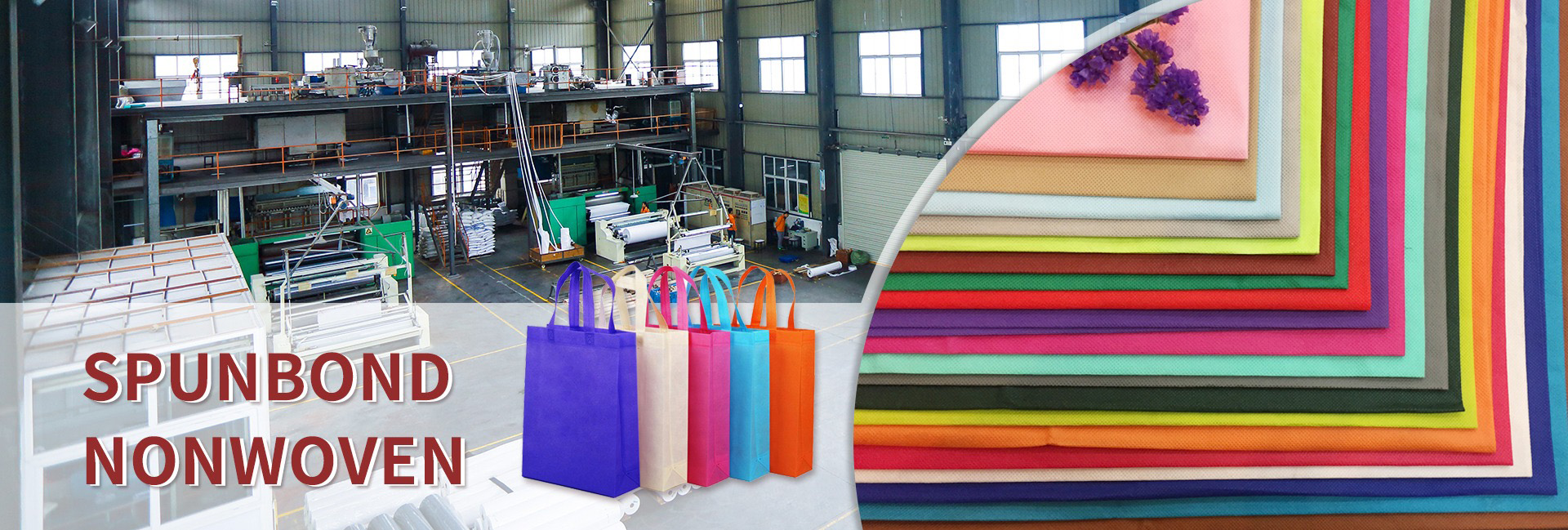
Dongguan Liansheng Non woven Technology Co., Ltd. was established in May 2020. It is a large-scale non-woven fabric production enterprise integrating research and development, production, and sales. It can produce various colors of PP spunbond non-woven fabrics with a width of less than 3.2 meters from 9 grams to 300 grams.
Post time: Nov-12-2025