
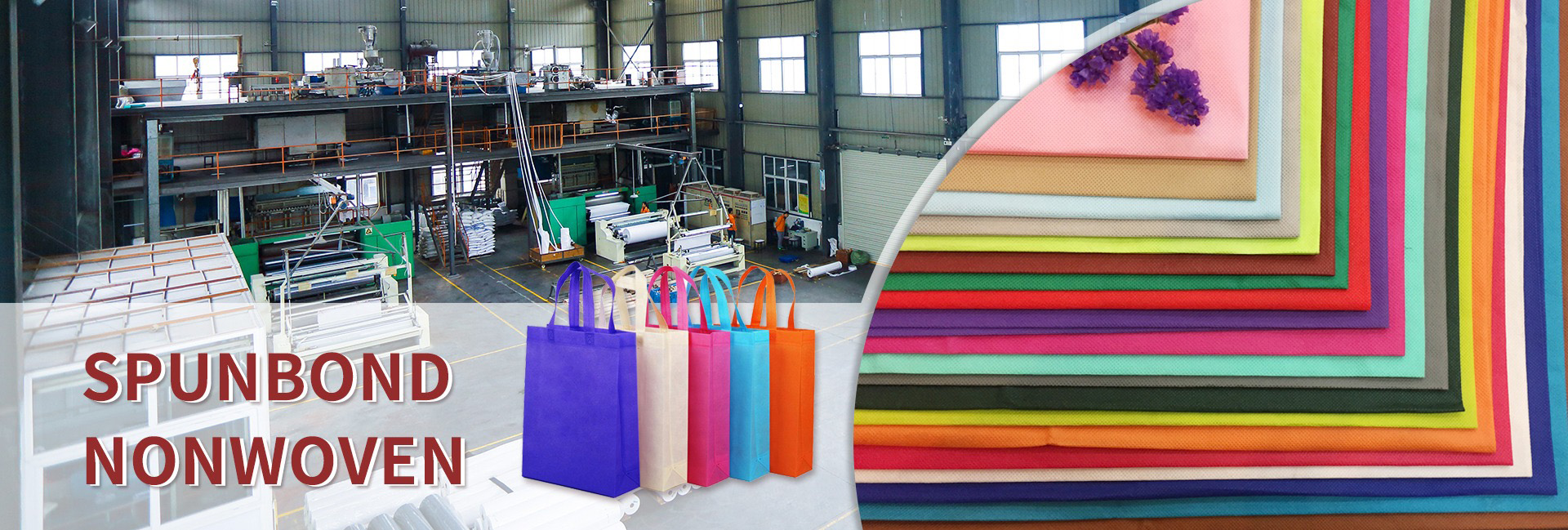
In the performance evaluation system of anti-slip nonwoven fabrics, the static friction coefficient is the core indicator for measuring their anti-slip effect, directly determining the stability of the material at the contact interface. When the static friction coefficient of an anti-slip nonwoven fabric is 0.5, it is not an abstract numerical value, but corresponds to a specific level of anti-slip ability and practical application value. It needs to be comprehensively interpreted in conjunction with the definition of the static friction coefficient, material characteristics, and application scenarios.
What is the coefficient of static friction?
The coefficient of static friction (usually denoted by μₛ) is a physical quantity that describes the magnitude of frictional resistance between two contacting objects when they are “relatively stationary but have a tendency to move relative to each other”. Its value is equal to the ratio of “maximum static friction force” to “normal force on the contact surface” (μₛ = Fₛₘₐₓ / N). Simply put, the greater the coefficient of static friction, the greater the external force required to cause relative sliding between objects, and the stronger the anti-slip stability; conversely, the easier it is to slide.
It should be noted that the coefficient of static friction is an “interface property” rather than an inherent property of a single material. It depends on the material compatibility between the anti-slip nonwoven fabric and the contact surface (such as the ground, tabletop, human skin, other fabrics, etc.), and is also affected by environmental factors such as the roughness, humidity, and temperature of the contact surface. The “coefficient of static friction of 0.5″ we discuss usually refers to the value measured under specified conditions between the nonwoven fabric and standard test surfaces (such as standard concrete, solid wood, stainless steel, etc.).
What level of anti-slip ability is it at?
Based on industry-wide standards and practical application scenarios, a static friction coefficient of 0.5 falls within the “moderately high” anti-slip category, with a clear physical significance and usage boundary. This can be specifically understood from the following two aspects:
1. The physical significance behind the numerical value: What external force is required to cause sliding?
According to the formula for calculating the static friction coefficient, if the static friction coefficient μₛ between the anti-slip non-woven fabric and the contact interface is 0.5, it means that to make the non-woven fabric slide forward relative to the contact surface, the required horizontal external force must be at least 50% of the “total weight of the non-woven fabric and its load”.
To illustrate with a common example: If a 10kg object (with a total normal force N ≈ 100N) is placed on a non-slip nonwoven fabric, a horizontal thrust of at least 50N (approximately equivalent to the gravitational force of a 5kg object) is required to make the object slide along the nonwoven fabric. This value reflects that the material possesses a certain “gripping ability” and can effectively resist minor external force disturbances, preventing it from easily sliding.
2. Industry anti-slip grade comparison: positioning and applicable scenarios of 0.5
In the non-woven fabric and anti-slip material industry, there is usually a set of default reference levels for static friction coefficient: μₛ < 0.3 for low anti-slip level (easy to slide, only suitable for scenarios without anti-slip requirements); 0.3 ≤ μₛ < 0.5 for medium anti-slip level (possesses basic anti-slip ability, suitable for lightly stressed scenarios); μₛ ≥ 0.5 for medium-high anti-slip level (good anti-slip effect, suitable for most conventional stressed scenarios); μₛ ≥ 0.8 for high anti-slip level (suitable for heavy loads, high-frequency activities, or high-risk anti-slip scenarios).
It can be seen that a static friction coefficient of 0.5 is the “critical value” between medium and medium-high anti-slip performance, indicating that anti-slip nonwoven fabrics have the anti-slip ability to meet the needs of most daily and some industrial scenarios, making it a common preferred indicator that balances practicality and cost.
Which application scenarios are suitable?
Anti-slip nonwoven fabrics have a wide range of application scenarios. The reason why the static friction coefficient of 0.5 has become a key performance indicator is that it can precisely adapt to multiple high-frequency usage scenarios, balancing anti-slip effect, material cost, and user experience:
1. Daily household scenarios: The fundamental safeguard for safety protection
In household settings, anti-slip nonwoven fabrics are commonly used in sofa cushions, mattress anti-slip layers, carpet bottom layers, tablecloth anti-slip linings, etc. In such scenarios, the forces exerted on objects are primarily “minor movements” (such as body sway when sitting or lying down, and gently dragging items). A static friction coefficient of 0.5 is sufficient to resist these external forces: for example, the anti-slip nonwoven fabric at the bottom of the sofa cushion can prevent the cushion from sliding with the body when sitting or lying down; the mattress anti-slip layer can prevent the mattress from shifting on the bed frame, ensuring safe sleep.
2. Medical care scenario: Stable and reliable environmental support
In the medical field, anti-slip nonwoven fabrics are commonly used for bed sheet liners, anti-slip layers on wheelchair cushions, and the bottom layer of nursing pads. For patients or elderly individuals with limited mobility, the stability of the contact surface is crucial. A static friction coefficient of 0.5 ensures that the liner or cushion does not easily slide when patients are turning over or moving, thus preventing injuries caused by slipping and bumping. At the same time, it also reduces the frequency of medical staff having to tidy up bed sheets and cushions, thereby enhancing nursing efficiency.
3. Light industrial packaging scenario: anti-slip and cushioning for cargo transportation
In the packaging of small goods (such as electronic products, fragile items, and small components), anti-slip non-woven fabric is often used as a cushioning and anti-slip material to wrap the goods or line the inside of the packaging box. With a static friction coefficient of 0.5, it can create sufficient friction between the goods and the packaging material, as well as between the goods themselves, to prevent goods from shifting or being damaged due to bumps and vibrations during transportation. It is particularly suitable for packaging light-weight goods (5-20kg).
4. Pay attention to boundaries: inapplicable high-demand scenarios
It should be clarified that a static friction coefficient of 0.5 is not “universally anti-slip” and is not suitable for heavy-load, high-frequency sliding, or high-risk anti-slip scenarios. For example: heavy equipment pads in industrial workshops (which need to withstand hundreds of kilograms of weight and require μₛ≥0.8), anti-slip mats in bathrooms (where the static friction coefficient decreases in a wet environment and requires an initial μₛ≥0.6), anti-slip pads in children’s play areas (which require higher stability to prevent falls), etc. These scenarios require materials with higher static friction coefficients or special anti-slip treatments.
How to Properly View the Static Friction Coefficient of Anti-slip Nonwoven Fabrics?
1. Test conditions are prerequisites: Different test standards (such as contact interface material, test pressure, and environmental humidity) can lead to differences in the values of the static friction coefficient. Therefore, when seeing the value of 0.5, it is necessary to first confirm the corresponding test conditions; otherwise, it will be impossible to accurately judge the anti-slip effect.
2. Bigger is not always better: An excessively high static friction coefficient can cause materials to become “rough”, affecting the user experience (such as difficulty in slightly adjusting the position of sofa cushions or unfolding packaging materials), and increasing the production cost of materials (requiring the addition of more anti-slip agents or the adoption of special processes). For most conventional scenarios, a static friction coefficient of 0.5-0.7 represents the optimal balance between “anti-slip effect, user experience, and cost”.
3. Need to consider other properties: The static friction coefficient is a core indicator, but it is not the only one. It is necessary to make a comprehensive judgment based on other properties such as tensile strength, wear resistance, and moisture resistance of the nonwoven fabric. For example, in a humid environment, if the strength of the nonwoven fabric decreases after absorbing water, even if the initial static friction coefficient is 0.5, the actual anti-slip effect will be significantly reduced.
Summary
For anti-slip nonwoven fabrics, a static friction coefficient of 0.5 signifies a “medium to high level of anti-slip capability”, effectively resisting minor external force disturbances in conventional scenarios. It is suitable for most high-frequency application scenarios such as home furnishing, medical care, and light industrial packaging.
It is a key performance indicator that balances practicality, user experience, and cost. In practical selection, it is necessary to make a comprehensive judgment based on testing conditions, specific application scenarios, and other material properties, avoiding blindly pursuing high values.
Dongguan Liansheng Non woven Technology Co., Ltd. was established in May 2020. It is a large-scale non-woven fabric production enterprise integrating research and development, production, and sales. It can produce various colors of PP spunbond non-woven fabrics with a width of less than 3.2 meters from 9 grams to 300 grams.
Post time: Jan-01-2026