
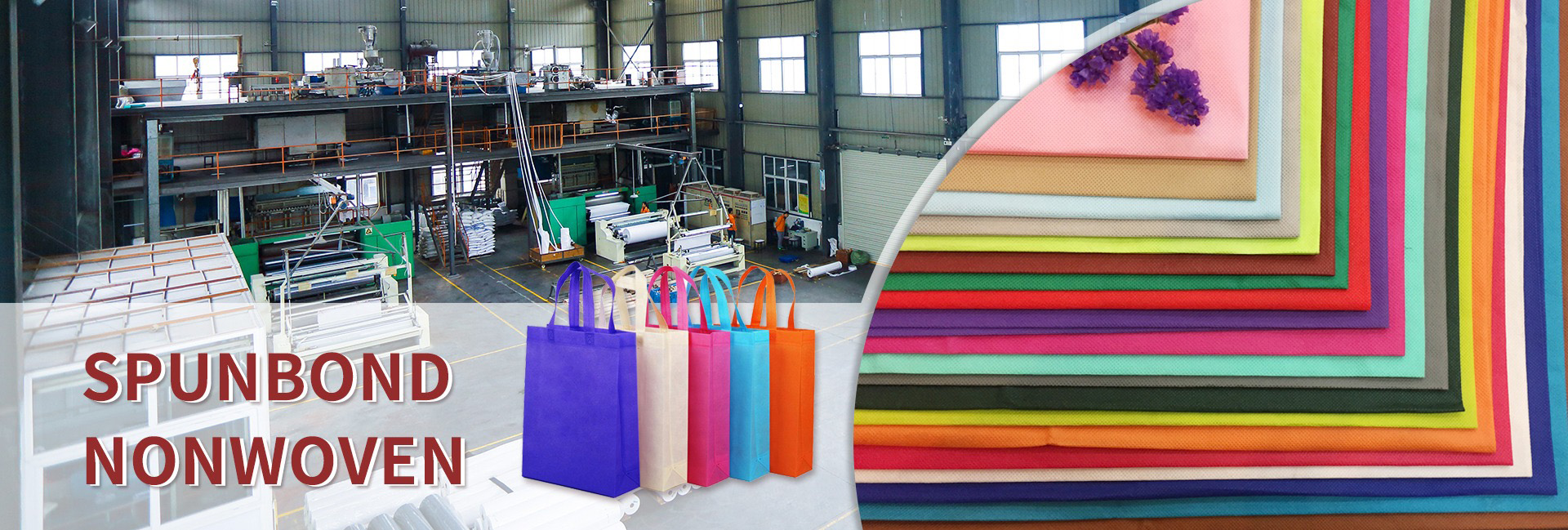
The masks, disposable bed sheets, medical protective clothing, and even eco-friendly bags and car interiors that you come into contact with every day hide a “universal material” – non-woven fabric. But you know what? Ordinary non-woven fabric has a single performance, while composite non-woven fabric can be called an “all-around player” in the materials industry. It is not only strong and durable, but also waterproof and breathable, and can filter and resist bacteria. Nowadays, it has already penetrated into all aspects of life and industry. Today, let me explain in plain language: What is composite non-woven fabric? What is stronger than ordinary non-woven fabric?
A new material with multiple layers of “stacked buffs”
Simply put, composite non-woven fabric is a new material formed by firmly bonding two or more layers of non-woven fabric, film or fiber materials with different functions together through processes such as hot pressing, film coating, ultrasonic bonding, spray coating, etc., to form a multi-layer functional overlay.
If ordinary non-woven fabric is compared to a “single champion” who is only good at one performance (such as being strong but not waterproof, soft but easy to break), then composite non-woven fabric is an “all-around champion” – combining the advantages of different materials “buff”, and possessing various properties such as strength, waterproof, breathable, filtering, antibacterial, anti-static at once.
Its core logic is simple: leverage strengths and avoid weaknesses, complement each other’s strengths . No single material can meet the requirements of complex scenarios, and composite technology can turn “weaknesses into advantages, advantages into trump cards”.
Common composite non-woven fabric structures
Composite non-woven fabric is not just about “sticking several layers together”, but about precise matching according to needs. Each structure has its own “skills”, and the most common ones are these four:
SMS structure (spunbond+meltblown+spunbond): the “main force” of medical protection
This is the most classic and widely used composite structure, known as the “king of protection”.
-Outer layer (spunbond non-woven fabric): Strong, wear-resistant, tensile, not easily broken, responsible for “carrying and manufacturing”;
-Intermediate layer (melt blown non-woven fabric): ultra-fine fiber structure with extremely small pores, efficient filtration of bacteria, viruses, and dust , responsible for “protection”;
-Inner layer (spunbond non-woven fabric): Soft and skin friendly, breathable and not stuffy, responsible for “comfort”.
Usage: Medical protective clothing, surgical masks, surgical gowns, isolation gowns, are the core materials of medical supplies during the epidemic.
Non woven fabric+PE coating: waterproof and anti-seepage “little expert”
Spraying a layer of PE (polyethylene) film on the surface of ordinary non-woven fabric is equivalent to putting a waterproof raincoat on the fabric.
-Advantages: 100% waterproof, anti-seepage, leak proof , while retaining the softness of non-woven fabric;
-Disadvantage: Slightly weaker breathability (but can be treated with micropores to balance breathability).
Usage: Disposable bed sheets, waterproof aprons, medical bedding sheets, eco-friendly bags, car sunscreens.
Water jet+absorbent cotton+spunbond: soft and absorbent “intimate style”
Featuring “softness+strong water absorption”, each layer performs its own duties:
-Surface layer (water jet non-woven fabric): super soft, skin friendly and non irritating, suitable for sensitive skin;
-Middle layer (absorbent cotton/high absorbent fiber): quickly absorbs liquids (water, blood, sweat), locks water and does not reverse osmosis;
-Bottom layer (spunbond non-woven fabric): Strong and sturdy to prevent deformation and damage after absorbing water.
Usage: High end wiping cloth, sanitary pad surface, baby diapers, medical absorbent pad.
Two component/multi-component composite: lightweight and durable “high-end model”
Directly mixing two or more polymers (such as PP+PET) during the fiber production stage to form a structure of “one fiber, two materials”.
-Advantages: thinner, more uniform, durable, high strength, less likely to chip, stable size and less likely to deform;
-Usage: High end filter material, automotive interior, high-end hygiene products, industrial wiping cloth.
Composite non-woven fabric vs. ordinary nonwoven fabric
Ordinary non-woven fabrics (single structures such as spunbond, meltblown, and hydrojet) have “mediocre” performance, while composite non-woven fabrics achieve comprehensive upgrades in performance, strength, function, barrier properties, and practicality through multi-layer stacking, and the gap is clear at a glance:
Comprehensive performance
-Ordinary non-woven fabric: either strong but not waterproof (spunbond), filtered but easily breakable (meltblown), or soft but low strength (hydroentangled), can only meet a single demand;
-Composite non-woven fabric: It has multiple properties such as toughness, waterproofing, breathability, filtration, antibacterial, anti-static , etc. For example, SMS fabric: the outer layer is resistant to pulling, the middle block bacteria, and the overall breathability, and can be used for at most one sheet.
Double strength
-Ordinary non-woven fabric (especially melt blown): thin, brittle, easy to tear, easy to chip off , easily torn with a light pull, poor durability;
-Composite non-woven fabric: multi-layer “stacking reinforcement”, tensile strength and tear strength increased by 50% -200% , not easy to break, not easy to deform, resistant to friction, and not easy to layer even after repeated rubbing, greatly extending the service life.
Function customization
-Ordinary non-woven fabric: Fixed function, difficult to customize , additional coating is required to add waterproofing, and stacking is necessary to add filtering, resulting in high cost and poor effectiveness;
-Composite non-woven fabric: on-demand combination, precise customization , choosing materials like building blocks:
-Strong water absorption+softness → water jet+water absorbing layer;
-To be anti-static+filtered → conductive fiber+melt blown;
Truly achieving ‘one material, multiple functions’.
Strong barrier properties
-Ordinary non-woven fabric: large pores, poor barrier properties, unable to prevent bacteria, viruses, and blood infiltration , high risk in medical scenarios;
-Composite non-woven fabric: controllable pores, dense structure, efficient barrier against bacteria, viruses, dust, blood, body fluids , medical grade can prevent blood infiltration, and antibacterial ingredients can also be added. It is non-toxic and hypoallergenic, suitable for medical, maternal and child, food contact and other high safety requirements scenarios.
Good user experience
-Ordinary non-woven fabric: prone to shrinkage, wrinkling, unstable size, easy to deform during cutting and sewing, and has a brittle texture;
-Composite non-woven fabric: size stable, not easy to shrink, not easy to wrinkle , more convenient for cutting, sewing, and hot pressing; The hand feel can be soft or firm: the surface is soft and skin friendly, the inner layer is strong and supportive, more comfortable than ordinary non-woven fabric, and long-term use is not stuffy or irritating.
Composite nonwoven fabric is everywhere
Many people think that composite non-woven fabric is “unpopular”, but in fact, it has already penetrated into various aspects of life, healthcare, industry, agriculture, etc., silently “guarding” us every day:
Medical and health field (core application)
-Protective equipment: medical protective clothing, surgical masks, isolation gowns, surgical caps, protective face shields;
-Hygiene category: disposable bed sheets, duvet covers, pillowcases, medical bedding sheets, absorbent pads, sanitary napkins, baby diapers;
-Features: Aseptic, antibacterial, breathable, anti-seepage, hypoallergenic , safeguarding health and safety.
Daily Home and Environmental Protection
-Home: high-end wiping cloth, kitchen cloth, lazy cloth, sofa lining, mattress protective layer;
-Environmental Protection: Thickened eco-friendly bags, shopping bags, garbage bags, and courier cushioning materials;
-Features: Soft and absorbent, wear-resistant and durable, waterproof and moisture-proof, environmentally friendly and biodegradable .
Industry and Automotive
-Industry: high-efficiency filtration materials (air, liquid filtration), industrial wiping cloths, dust covers, sound insulation materials;
-Automobile: Interior (seats, ceiling, door panels), hood, soundproof cotton, waterproof lining;
-Features: High strength, friction resistance, aging resistance, high filtering accuracy, sound insulation .
Agriculture and Horticulture
-Agriculture: insulation and moisturizing film, insect proof net, fruit tree cold proof cloth, vegetable preservation cover cloth, seedling substrate cloth;
-Features: breathable, waterproof, anti-aging, heat preservation and moisturizing, insect prevention , helping agricultural production increase.
Composite non-woven fabric, the “all powerful king” of the materials industry
Summary in one sentence: Ordinary non-woven fabric is the “champion of a single event”, while composite non-woven fabric is the “all-around player” .
It combines the advantages of toughness, waterproofing, breathability, filtration, antibacterial, and anti-static through multi-layer composite technology, solving the pain points of “single performance, low strength, few functions, and poor durability” of ordinary non-woven fabrics. It has stronger performance, more comprehensive functions, and longer durability, making it the preferred material for high-end scenarios such as medical, health, protection, industry, and agriculture.
Next time you see masks, disposable bed sheets, and medical protective clothing, don’t forget their core material - composite non-woven fabric . It is this new material of “folded buff” that silently enhances our quality of life and safety guarantee!
Dongguan Liansheng Non woven Technology Co., Ltd. was established in May 2020. It is a large-scale non-woven fabric production enterprise integrating research and development, production, and sales. It can produce various colors of PP spunbond non-woven fabrics with a width of less than 3.2 meters from 9 grams to 300 grams.
Post time: May-19-2026