
Efficient utilization of the “soft armor” effect of high-strength spunbond fabric requires adherence to scientific adaptation principles. In terms of material selection, polyester based high-strength spunbond fabric is preferred for heavy-duty scenarios, while polypropylene material is emphasized for chemical resistant scenarios; Functional matching should match the characteristics of the goods, with reinforced coating protection for corrosive goods and anti-static design for flammable and explosive goods. During use, the filling amount should be controlled within 90% -100% of the rated load.
Granular goods should be evenly distributed to avoid center of gravity deviation, while powdered goods should be filled through vibration to reduce the void ratio to ≤ 15%, to prevent lifting imbalance and bag damage. In scenarios such as container lining and container bags, high-strength spunbond fabric often needs to be combined with materials such as coatings, aluminum-plastic films, and conductive wires. At this time, it is important to focus on the following four core issues to ensure the synergistic performance and structural stability of the composite materials.
Pre adaptation: Strictly control interface compatibility and avoid layering hazards from the source
The interface bonding strength directly determines the service life of composite materials, and priority should be given to achieving material and composition compatibility between high-strength spunbond fabrics and composite objects. The polarity and melting point of the material need to be accurately matched.
Polypropylene spunbond fabric has better compatibility with polyethylene (PE) coating and polypropylene fabric, making it suitable for moisture-proof composite of container lining; Polyester spunbond fabric has a higher compatibility with polyurethane (PU) and aluminum-plastic film, and is commonly used for heavy-duty composite of container bags to avoid delamination and detachment due to significant polarity differences in the later stages.
If cross material composite is required (such as polypropylene spunbond fabric with PU coating), plasma surface treatment or application of polyolefin primer should be carried out in advance to improve the interfacial adhesion, ensuring a peel strength of ≥ 3N/3cm (in accordance with FZ/T 80007.1 standard).
At the same time, it is necessary to investigate component conflicts, such as the conductive additives of the anti-static layer and the crosslinking agents of the moisture-proof coating not being in direct contact. An intermediate isolation layer should be added to avoid functional failure caused by mutual reaction, and to adapt to the packaging needs of chemical, flammable and explosive goods.
Process control: precise matching of parameters to ensure the integrity of composite structures
Deviation in process parameters can easily lead to material strength attenuation and functional damage. Therefore, it is necessary to make targeted adjustments based on the characteristics of spunbond fabric and composite materials to meet the production needs of packaging scenarios.
In the thermal composite process, polyester based spunbond fabric has a higher temperature tolerance (150-180 ℃), while polypropylene based fabric needs to be controlled at 120-150 ℃. At the same time, the hot rolling pressure should be adjusted to 0.3-0.5MPa to avoid melting and brittleness of spunbond fabric fibers caused by high temperature, and to prevent virtual adhesion caused by insufficient pressure. It is suitable for composite reinforcement of container bag sling and base fabric.
When coating composite, the dry film thickness of PE coating needs to be controlled at 20-50 μ m. It is applied uniformly with a scraper to ensure even coverage of the pores of the spunbond fabric, which not only does not block the breathable channel (meeting the packaging requirements of powder goods), but also ensures moisture resistance and barrier performance, suitable for the sea freight scene of container lining. For the SMS three-layer composite structure, it is necessary to optimize the bonding speed between the melt blown layer and the spunbond layer, so that the interlayer adhesion rate is ≥ 95%, to avoid interlayer slip during subsequent loading, unloading, and lifting.
Functional Collaboration: Balancing complementary performance and adapting to scene structure requirements
After composite, it is necessary to ensure that the functions of each material are complementary and conflict free, while adapting to the mechanical and protective requirements of specific packaging scenarios. In terms of functional coordination, when the anti-static conductive wire is combined with the moisture-proof coating, the conductive wire needs to penetrate the coating and be exposed or laid on the inside of the coating to ensure a grounding resistance of ≤ 10 Ω, which is compatible with the packaging of flammable and explosive goods such as sulfur in container bags; After the composite of flame-retardant coating and high-strength spunbond fabric, it is necessary to ensure the ultimate oxygen index (LOI ≥ 32%) and the retention rate of the spunbond fabric’s fracture strength ≥ 85%, which does not affect the heavy-duty protection performance.
In terms of structural adaptation, the composite structure of “spunbond fabric+aluminum-plastic film” for container lining requires aluminum-plastic film as the inner layer to block moisture, and spunbond fabric as the outer layer to withstand friction, avoiding direct contact and damage of aluminum-plastic film with the outside world; When assembling container bags, the joint between the sling and the base fabric of the bag body needs to use a dual process of “edge wrapping sewing+hot pressing composite” to ensure that the joint strength is not less than 70% of the base fabric strength, meeting the lifting requirements of 1.5-2 tons of heavy loads.
Full process verification: Strengthen the detection process and adapt to extreme working conditions
Composite products need to undergo multidimensional testing to identify hidden dangers, and to verify their adaptability in combination with extreme working conditions of industrial packaging, in order to ensure the safety of goods storage and transportation. Routine testing includes peel strength and temperature and humidity cycling test (10 cycles from -20 ℃ to 60 ℃ without delamination), and additional acid and alkali immersion test is required in chemical scenarios (72 hours without significant strength degradation).
For specific scenarios, composite materials for shipping container liners need to pass a 48 hour neutral salt spray test (non corrosive), and heavy-duty container bags need to undergo top lifting and drop composite tests to ensure structural stability under extreme working conditions. At the same time, redundant design should be reserved, and the total thickness of the composite layer should not exceed three times the thickness of the base fabric, to avoid a decrease in flexibility caused by excessive material thickness, which cannot fit the contour of the container or the shape of the loaded container bag, while balancing protective performance and adaptability.
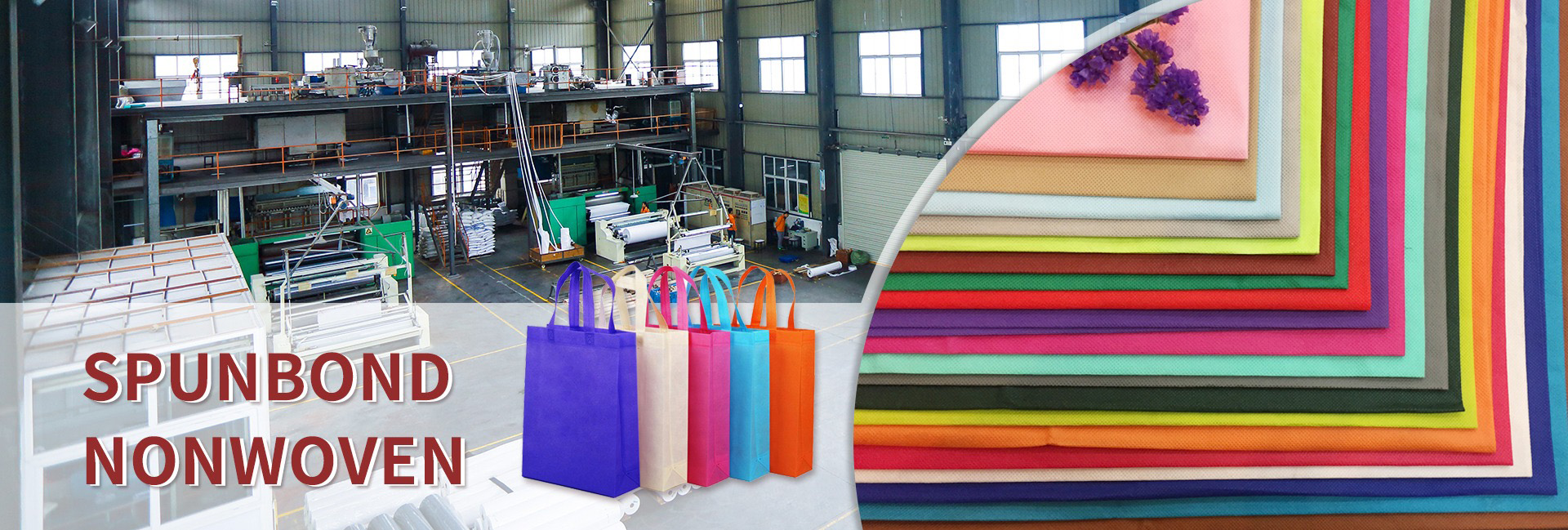
Dongguan Liansheng Non woven Technology Co., Ltd. was established in May 2020. It is a large-scale non-woven fabric production enterprise integrating research and development, production, and sales. It can produce various colors of PP spunbond non-woven fabrics with a width of less than 3.2 meters from 9 grams to 300 grams.
Post time: Jan-26-2026