
As camping, hiking, and urban light outdoor activities become new trends in people’s lives, and as rural revitalization and new infrastructure continue to advance, the outdoor economy is ushering in an unprecedented explosive period. According to data from the General Administration of Sport of China, the total scale of China’s outdoor sports industry is expected to exceed 3.2 trillion yuan by 2026, with a growth rate of over 15% for five consecutive years, becoming a new growth pole that drives consumption and industrial upgrading. In this outdoor craze, a kind of “invisible material” is quietly infiltrating each subdivision track, which is anti-aging non-woven fabric.
Unlike traditional non-woven fabrics, which are prone to embrittlement, fracture and pulverization under outdoor exposure, anti-aging non-woven fabrics can extend their outdoor service life from several months to 3-5 years by adding anti-aging masterbatches and optimizing production processes, and greatly improve their tensile strength and weather resistance, perfectly adapting to the complex external environmental needs. Nowadays, this “durable” material is no longer limited to niche scenarios, but has quietly “infiltrated” multiple trillion level tracks, becoming the “hidden winner” behind the outdoor economy explosion. Its presence is everywhere from leisure and entertainment to industrial upgrading.
3.2 trillion yuan outdoor sports track, from camping to light outdoor “invisible protective net”
Outdoor sports are the core engine of the outdoor economy. By 2026, the total scale of China’s outdoor sports industry will exceed 3.2 trillion yuan, with urban light outdoor becoming the fastest growing segment with a growth rate of 122%. The market size will reach 1.5 trillion yuan, attracting 350 million urban outdoor people to participate. With the advantages of lightweight and strong weather resistance, anti-aging non-woven fabrics have become the “core supporting role” of outdoor sports equipment, silently guarding people’s outdoor experience.
In camping scenes, anti-aging non-woven fabrics have been used everywhere. The ceiling, tent inner layer and moisture-proof pad required for exquisite camping are mostly made of non-woven fabric with anti-aging masterbatch, which can not only resist the aging caused by outdoor ultraviolet exposure and temperature difference between day and night, but also achieve lightweight portability to meet consumers’ demand for “easy travel”. The data shows that the domestic camping equipment market scale has exceeded 100 billion yuan in 2024, of which the penetration rate of anti-aging non-woven fabrics in camping equipment is more than 60%. With the integration and development of camping sites, home stays and hot springs, this demand is still rising.
In addition to camping, hiking, cycling, ice and snow sports and other scenes are also accelerating the penetration of anti-aging non-woven fabrics. Portable sleeping bags, outdoor backpack linings, wind protectors and seat covers in cycling equipment, and even the inner layer of protective gloves in ice and snow sports are inseparable from anti-aging non woven fabrics. It not only enhances the durability of equipment, but also improves the user experience through its breathable and waterproof features. According to statistics, the total online consumption of domestic outdoor equipment in 2024 will exceed 300 billion yuan, of which the growth rate of functional equipment including anti-aging non-woven fabrics will reach 51%, far exceeding the growth level of ordinary outdoor equipment.
What is more noteworthy is that the outdoor consumer group presents characteristics of “youthfulness, femininity, and family oriented”, and their requirements for the appearance and practicality of equipment are synchronously increasing. The anti-aging non-woven fabric can be customized to a variety of colors and textures through process optimization, which meets the personalized needs of Generation Z, and its high cost performance also makes it the first choice for entry-level outdoor enthusiasts, further expanding the penetration range of outdoor sports tracks.
Trillion level agricultural outdoor track, a “good helper for increasing efficiency” from planting to breeding
The agricultural outdoor scene is the traditional advantage field of anti-aging non-woven fabrics. With the promotion of rural revitalization and the upgrading of modern agriculture, the scale of China’s agricultural industry has exceeded one trillion, and anti-aging non-woven fabrics are becoming the key material to promote the cost reduction and efficiency increase of agriculture, completely changing the production mode of traditional agriculture. In outdoor farmland, ordinary non-woven fabrics will break due to pulverization due to ultraviolet radiation in only 1-2 months. The service life of anti-aging non-woven fabrics can be extended to 3-5 years, greatly reducing the replacement cost of farmers.
In the field of planting, the application of anti-aging non-woven fabrics has achieved full coverage. Anti aging non-woven fabric materials are used for grass proof cloth, seedling raising cloth, fruit tree bagging and other products, which can not only resist wind and sun and agricultural machinery rolling, but also be breathable to conserve moisture, prevent weed growth, and improve crop yield and quality. Data shows that the penetration rate of anti-aging non-woven fabrics in the agricultural sector has reached 38.2% in 2022, an increase of 12.7 percentage points from 2019. It is expected that the market size of this segment will exceed 8.5 billion yuan by 2025, with a compound growth rate of 9.3%.
In the field of aquaculture, anti-aging non-woven fabrics also play an important role. The thermal insulation layer, fence net, feed storage bag, etc. of outdoor breeding shed, after adopting anti-aging non-woven fabric, can resist rain, snow, sun exposure and other adverse weather, extend the service life, and at the same time, it has the characteristics of breathability and anti-corrosion, providing a more comfortable growth environment for livestock and poultry. In addition, in aquaculture, anti-aging non-woven fabrics can be used to make breeding cages and filter fabrics, which can not only prevent water pollution, but also resist the corrosion of microorganisms in water, and adapt to outdoor complex breeding environment.
With the transformation of modern agriculture to large-scale and refined, the demand for anti-aging non-woven fabrics continues to upgrade. For example, the non-woven fabric added with special anti-aging ingredients can realize the degradation function, which not only meets the durable demand, but also conforms to the environmental protection policy, becoming an important support for the green development of agriculture, and further consolidating its position in the trillion level agricultural outdoor track.
Trillion level infrastructure outdoor track, the “durable guardian” from municipal to transportation
New infrastructure and municipal projects are an important part of the outdoor economy. The scale of China’s infrastructure industry has remained at the trillion level all the year round. With excellent mechanical properties and weather resistance, anti-aging non-woven fabrics have become the “rigid materials” for infrastructure outdoor scenes and are widely used in roads, railways, municipal greening, mine restoration and other fields.
In highway and railway construction, anti-aging non-woven fabrics are widely used for subgrade reinforcement, pavement maintenance and waterproof isolation layer. It can effectively disperse the pressure on the roadbed, prevent soil erosion, and resist outdoor UV rays, rain and snow erosion, prolong the service life of the roadbed and pavement, and reduce maintenance costs. Data shows that the consumption of anti-aging non-woven fabrics in the construction industry will reach 230000 tons in 2022. Driven by the dual drive of new urbanization construction and the renovation of old residential areas, the market capacity will grow at an average annual rate of 8.1% in the next three years. Especially in the field of prefabricated buildings, its penetration rate has rapidly increased to 41%.
In the field of municipal greening and mine restoration, anti-aging non-woven fabric has become a “sharp tool for ecological restoration”. Slope protection, lawn planting and coverage in municipal greening, vegetation cultivation and soil sand fixation in mine restoration are inseparable from the support of anti-aging non-woven fabrics. This material is permeable and does not accumulate sediment, which can increase the germination rate of grass seeds by up to 90%. One roll laying can save 50% of time, and can quickly restore vegetation on barren slopes and mines, which is in line with the development concept of “green mountains and clear waters are as valuable as mountains of gold and silver”. By 2024, the demand for anti-aging non-woven fabrics in the field of municipal greening and mine restoration in China will increase by 18% annually, becoming a new growth point of infrastructure race track.
In addition, in outdoor infrastructure scenes such as water conservancy projects and port construction, anti-aging non-woven fabrics are also used in waterproof, anti-corrosion, filtering and other links. With its durability and environmental protection, they gradually replace traditional materials and become the “invisible pillar” of infrastructure outdoor track.
A hundred billion level outdoor cultural and tourism track, a “quality upgrade agent” from scenic spots to homestays
Outdoor cultural tourism is an important extension of outdoor economy. With the rise of “micro vacation” and “rural tourism”, the scale of outdoor cultural tourism market in China has exceeded 100 billion, and is developing towards quality and personalization. Anti aging non-woven fabrics are becoming the “secret weapon” for upgrading the quality of cultural tourism scenes.
In the construction of the scenic spot, anti-aging non-woven fabrics are widely used in outdoor sunshades, rest area seat covers, signboard jackets and other facilities, which can not only resist outdoor exposure and wind and rain erosion, maintain the integrity of the facilities, but also through customized design, fit the overall style of the scenic spot, and improve the tourist experience. For example, in rural tourist attractions, anti-aging non-woven fabrics can be used to make outdoor sunshades and yard fences for home stays, which are both beautiful and durable, and can create a natural and fresh atmosphere, which fits the positioning of rural cultural tourism.
Anti aging non-woven fabrics are also widely used in outdoor cultural tourism supporting services. Most of the temporary rest tents, tourist raincoats, environmental protection garbage bags, etc. in the scenic area are made of anti-aging non-woven fabric, which is light and durable and meets the environmental requirements to reduce the garbage pollution in the scenic area.
At the same time, with the personalized development of outdoor cultural tourism, customized anti-aging non-woven products, such as sunshades and souvenir bags printed with the logo of the scenic spot, have also become an important carrier for the scenic spot to enhance its brand influence.
Data shows that in 2024, the total number of outdoor cultural and tourism merchants in China will reach 27000, with an increase rate of more than 50%, of which nearly 70% will use anti-aging non-woven fabric related products to improve service quality. With the continuous expansion of the outdoor cultural and tourism market, the demand for anti-aging non-woven fabrics will be further released and become a “potential stock” in the hundreds of billions of track.
Opportunities and challenges coexist, and anti-aging non-woven fabrics are on the road of “track breakthrough”
The outbreak of outdoor economy has brought unprecedented development opportunities for anti-aging non-woven fabrics. According to Verified Market Research, the global market size for anti-aging non-woven fabrics is expected to reach 21.4 billion US dollars by 2025, with the Chinese market accounting for 38% of the total. The market is expected to maintain high-speed growth in the coming years. However, at the same time, the industry is also facing some challenges: fluctuations in raw material prices affecting profits, intense homogenization competition in the mid to low end market, and room for improvement in high-end technology.
However, with the continuous iteration of technology, the performance of anti-aging non-woven fabrics continues to improve, and the application scenarios are also expanding. For example, by optimizing the anti-aging masterbatch formula, the service life of the product can be further extended; Through technological innovation, multi-functional integration such as waterproofing, breathability, and flame retardancy can be achieved, adapting to more outdoor scenes. At the same time, domestic enterprises have gradually broken the international monopoly through technological breakthroughs, realized the domestic substitution of anti-aging non-woven fabrics, and further improved their competitiveness in the global market.
Looking ahead to the future, as the outdoor economy continues to heat up, trillion dollar outdoor sports, agriculture, infrastructure tracks, as well as billion dollar outdoor cultural and tourism tracks, will continue to unleash demand potential. As the “durable” core material for outdoor scenes, anti-aging non-woven fabric will continue to dig into the existing track, expand more emerging scenes, achieve “track breakthrough” in the wave of outdoor economy, and become an important force to promote the upgrading of the material industry and help the high-quality development of outdoor economy.
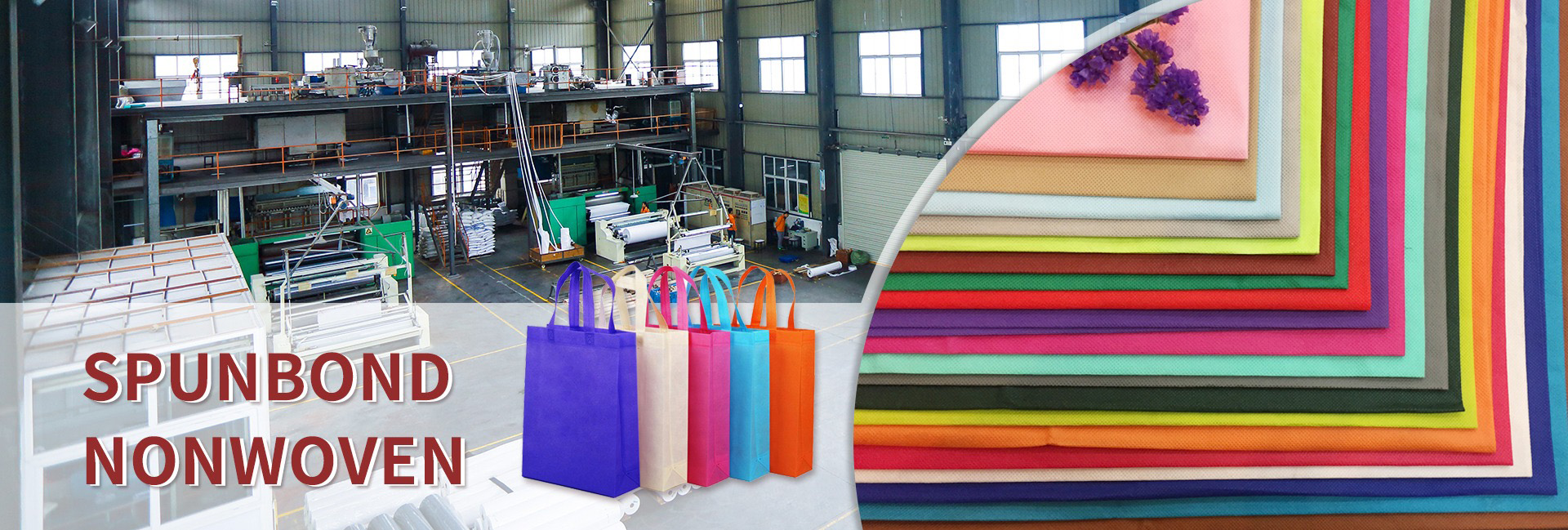
Dongguan Liansheng Non woven Technology Co., Ltd. was established in May 2020. It is a large-scale non-woven fabric production enterprise integrating research and development, production, and sales. It can produce various colors of PP spunbond non-woven fabrics with a width of less than 3.2 meters from 9 grams to 300 grams.
Post time: Apr-27-2026