
Normally, PET material is stronger, more durable, and heat-resistant than PP material. If you need to make durable products such as bottles, cans, etc., PET material may be more suitable. In addition, PET material is also more transparent than PP material, which gives PET material an advantage in making transparent or semi transparent products. However, PP material also has its advantages. It is softer, lighter, and easier to process and shape than PET material. If you need to make soft and lightweight products such as bags, clothing, etc., PP material may be more suitable.
What are the characteristics of PET material?
1. The colors are bright and the color difference is small, with a strong visual sense of three dimensionality.
2. PET material does not explode during processing and rarely experiences edge breakage.
3. It has good mechanical properties, with an impact strength 3-5 times that of other films and good flexural resistance. Resistant to oil, fat, dilute acid, dilute alkali, and most solvents.
4. It has excellent resistance to high and low temperatures, and can be used for a long time within the temperature range of 120 ℃. It can withstand high temperatures of 150 ℃ and low temperatures of -70 ℃ in the short term, and its mechanical properties are minimally affected by high and low temperatures.
5. Low gas and water vapor permeability means excellent gas barrier, water, oil, and odor resistance properties. High transparency, can block ultraviolet rays, and has good luster. Non toxic, odorless, with good hygiene and safety, it can be directly used for food packaging.
6. Good electrical insulation performance, less affected by temperature, but poor corona resistance. Good temperature, weather resistance, chemical stability, low water absorption, resistance to weak acids and organic solvents, but not resistant to hot water immersion or alkali.
7. PET resin has a high glass transition temperature, slow crystallization rate, long molding cycle, high molding shrinkage, poor dimensional stability, brittle crystallization, and low heat resistance.
What are the properties of PP?
1. Physical properties: non-toxic, odorless, tasteless, with a milky white high crystalline density of only 0.9-0.91g/cm3, and good stability to water.
2. Thermal performance: It has good heat resistance, and its products can be disinfected and sterilized at temperatures above 100 ℃ without deformation at 150 ℃ without external force. The brittleness temperature is -35 ℃, and brittleness occurs below -35 ℃. Its cold resistance is not as good as polyethylene.
3. Chemical stability: Polypropylene has good chemical stability, except for being corroded by concentrated sulfuric acid and nitric acid, it is relatively stable to various other chemical reagents. However, low molecular weight fatty hydrocarbons, aromatic hydrocarbons, and chlorinated hydrocarbons can soften and swell polypropylene. At the same time, its chemical stability increases with the increase of crystallinity. Therefore, polypropylene is suitable for making various chemical pipelines and fittings, and has good anti-corrosion effect.
4. Electrical performance: It has a high dielectric constant and can be used to make heated electrical insulation products with increasing temperature. It also has a high breakdown voltage and is suitable for use as an electrical accessory. Good resistance to voltage and arc, but high static electricity and easy aging when in contact with copper.
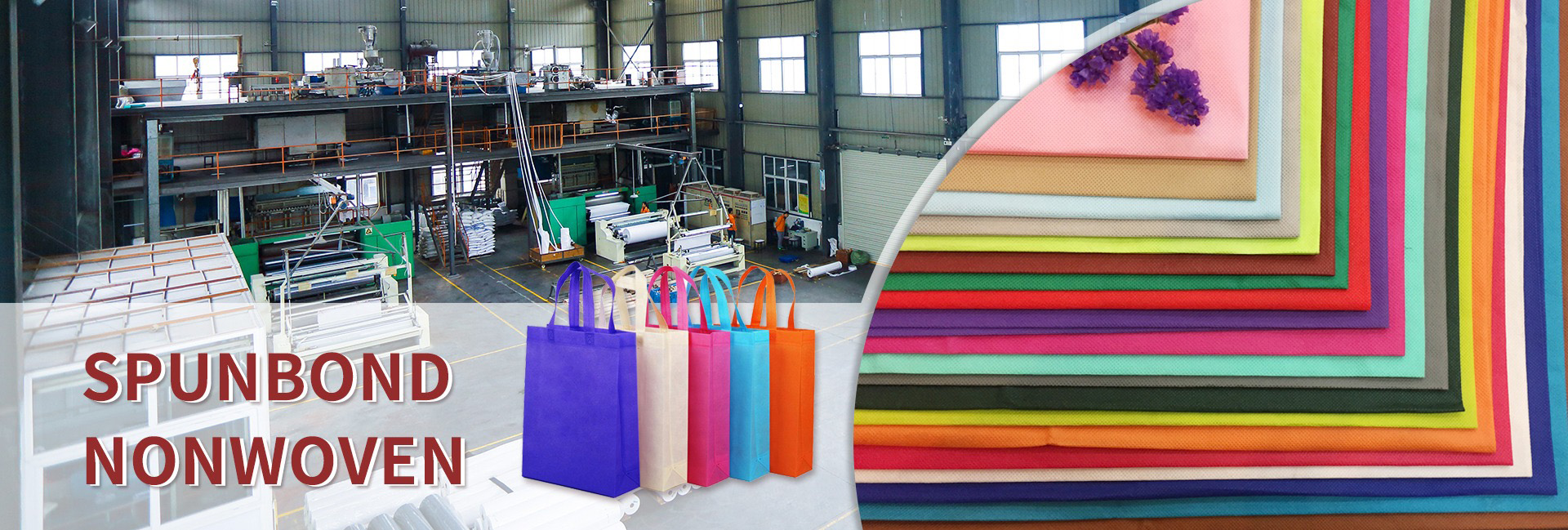
Dongguan Liansheng Non woven Technology Co., Ltd. was established in May 2020. It is a large-scale non-woven fabric production enterprise integrating research and development, production, and sales. It can produce various colors of PP spunbond non-woven fabrics with a width of less than 3.2 meters from 9 grams to 300 grams.
Post time: Mar-05-2025