
Sleep protection for infants and young children, starting from the “intimate layer”
Infants and young children aged 0-6 have delicate skin, sensitive respiratory tract, and immature immune system. They have much higher requirements for the safety, cleanliness, and mildness of bedding materials than adults. As a sleeping product that comes into contact with the face, mouth, and nose for a long time every day, the inner protective fabric of the pillow directly affects the baby’s respiratory health and skin comfort.
Nowadays, the vast majority of professional baby pillows and children’s protective pillows on the market prioritize the use of low sensitivity spunbond non-woven fabric as the isolation protective layer in the inner structure. It is not directly exposed, but it undertakes the core functions of mite prevention, dust prevention, sweat insulation, anti drilling velvet, and anti allergy. Why do baby pillowcases require inner layer fabric, low sensitivity, and spunbond fabric? Behind it are the essential choices determined by children’s health standards, material science, and parenting scenarios. Low sensitivity spunbond fabric is the most crucial “first layer of safety” that cannot be seen in baby pillowcases.
Infant and toddler skin and physiological characteristics
1.The skin barrier is weak, making it prone to redness, itching, and allergies
The skin thickness of infants and young children is only one-third of that of adults, and the stratum corneum is fragile with poor resistance. Residual dyes, fluorescent agents, synthetic fibers, and plush debris in ordinary fabrics can all cause contact allergies, rashes, and dryness. Once the fabric becomes rough, flaky, and irritating, the baby may experience restless sleep, frequent scratching, and may also cause secondary infections.
2.Respiratory sensitivity, dust mites, and dust are high-risk factors
When a baby sleeps, their mouth and nose are close to the pillow, and the fiber debris, tiny dust, and dust mite excrement inside the pillow are easily inhaled, which can cause problems such as sneezing, nasal congestion, coughing, and allergic rhinitis. Dust mites are everywhere in the home environment, and the warm and humid pillow core is the location where dust mites are prone to breed.
3.Easy to drool and sweat, the fabric must be breathable and not stuffy
Infants and young children have a fast metabolism, are prone to sweating on their heads, and have drooling, milk spillage, and other conditions, which can cause pillows to become damp. If the inner layer is not breathable and moisture is trapped inside, it can breed bacteria, produce odors, and easily make the baby’s head stuffy, heat rash, and unable to sleep soundly.
4.The filling material of the pillow needs to be protected to prevent loose threads and drilling
Children’s pillows are commonly filled with cotton, fiber, latex, buckwheat husks, and other materials. Without an inner layer for isolation, it is easy for cotton to run, drill, and leak debris, which not only affects the lifespan of the pillow core but may also be ingested or inhaled by babies, posing a safety hazard.
Why has low sensitivity spunbond fabric become the “standard” for the inner layer of baby pillowcases?
1.Truly hypoallergenic and non irritating: strict safety control from raw materials to production
Low sensitivity spunbond fabric is made from high-purity polypropylene as raw material, free of fluorescent agents, formaldehyde, carcinogenic aromatic amines, and dye residues. The production process is clean and environmentally friendly, meeting the Class A standards for infant textiles. The surface of the fabric is smooth, without shedding hair or chips, and does not rub or itch when in contact with the skin, reducing the risk of allergies from the source. It is especially suitable for long-term use by babies with eczema and sensitive skin.
2.Physical mite and dust prevention: building a “barrier” for isolation and protection
The structure of spunbond fabric web is uniform and dense, with small pore sizes, which can effectively prevent dust mites from passing through, block dust and dandruff, and reduce allergen contact. It does not rely on chemical mite removal agents, but relies on physical structure to achieve protection, which is safer and more durable, allowing babies to sleep away from mite threats and breathe more smoothly.
3.Breathable and impermeable: Quickly wicks sweat, keeping dry and not stuffy
The biggest advantage of low sensitivity spunbond fabric is its breathability and moisture permeability, but it is not easy to leak. Can quickly export sweat and moisture from the baby’s head, keep the inside of the pillow dry, and reduce bacterial growth; At the same time, it can slightly prevent saliva and milk from seeping into the deep layers of the pillow core, reducing the probability of mold, yellowing, and odor, making cleaning easier.
4.Flexible and firm without shedding threads: firmly lock the filling material of the pillow core
As an inner layer isolation cloth, it has moderate strength, is soft and not brittle, can effectively wrap the pillow core, prevent fiber running, down drilling, and particle leakage, avoid the risk of babies scratching, sucking, and ingesting, and is safer to use. At the same time, it is wear-resistant and durable, and is not easily damaged by repeated cleaning and rubbing. It will not deform after long-term use.
5.Lightweight fit: does not affect pillow height and comfort
Low sensitivity spunbond fabric is lightweight, soft, and comfortable, without increasing the thickness and hardness of the pillow. It does not damage the scientific height and support of the baby pillow, making it more natural for the baby to sleep. The fabric is too hard and thick, which will not affect the neck and sleeping posture.
Why not use cotton cloth, plastic film, or ordinary non-woven fabric?
1.Cotton fabric: easy to absorb moisture, prone to mites, difficult to dry, and prone to residual stains
Although cotton fabric is soft, it has strong water absorption and dries slowly. Long term use can easily breed bacteria and dust mites, and it is difficult to completely block small dust particles. Its protective properties are insufficient and it is not suitable for use as the inner layer of pillow cores.
2.Plastic film/waterproof cloth: non breathable, sweaty, odorous, easily allergic
Completely non breathable, it can make the baby’s head hot and sweaty, preventing moisture from being expelled, making it easy to cover prickly heat and eczema, and the touch is cold and hard, resulting in poor experience and potential safety and health hazards.
3. Ordinary non-woven fabric: may have odor, debris, irritation, and not meet standards
Ordinary industrial non-woven fabrics that have not undergone low sensitivity treatment may contain impurities, have a strong odor, and shed hair, which does not meet the safety standards for infants and young children. Low sensitivity spunbond fabric, on the other hand, has undergone infant grade softening and cleaning treatment, resulting in a significant difference in quality between the two.
Identify the “low sensitivity spunbond fabric inner layer” for peace of mind
Choosing a pillow for a baby should not only focus on the appearance pattern, but also on the inner layer protection. Parents are advised to pay close attention to:
Clearly label low sensitivity/infant A type/no fluorescence, no formaldehyde;
The structure is equipped with an inner layer of spunbond fabric insulation layer, which is dust-proof, mite proof, and anti drilling velvet;
The fabric is soft and shavings free, breathable and not stuffy, clean and odorless;
Removable, easy to clean, reduces bacterial growth, and facilitates daily care.
During use, the outer pillowcase should be cleaned frequently, while the inner layer of low sensitivity spunbond fabric provides continuous protection, ensuring the baby’s sleep health.
Conclusion
The safety of infant bedding is hidden in details; The baby’s comfortable sleep is hidden in the inner layer. The reason why low sensitivity spunbond fabric has become the “standard inner layer” of professional baby pillowcases is not simply a matter of material selection, but a scientific design that prioritizes safety, low sensitivity, and protection.
It is gentle, skin friendly, non irritating, physically mite resistant, non allergic, breathable, dry, and not stuffy, with a secure lock core for safer protection of the baby’s most fragile skin and respiratory tract in the most reliable way. During the critical sleep stage of baby growth, choosing a professional pillow with a low sensitivity spunbond inner layer is to choose a more reassuring, healthy, and comfortable growth protection.
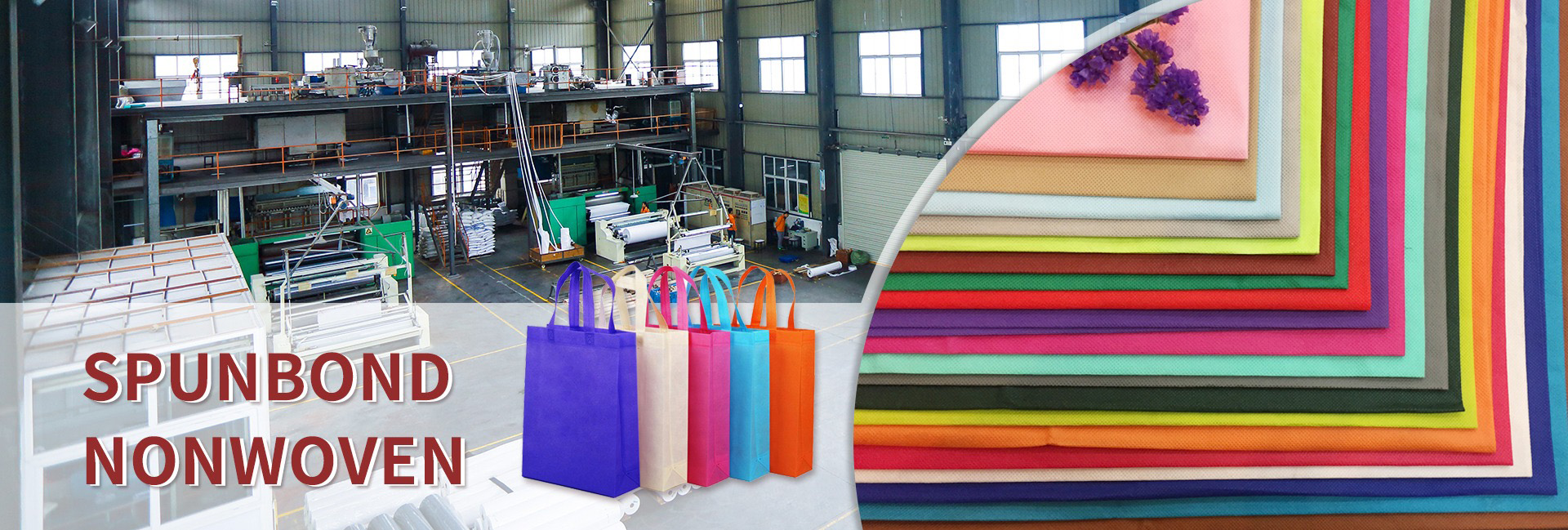
Dongguan Liansheng Non woven Technology Co., Ltd. was established in May 2020. It is a large-scale non-woven fabric production enterprise integrating research and development, production, and sales. It can produce various colors of PP spunbond non-woven fabrics with a width of less than 3.2 meters from 9 grams to 300 grams.
Post time: Mar-26-2026