
Non woven fabric slitting machine is a specialized equipment used to cut non-woven fabric materials, widely used in the manufacturing of non-woven fabrics, tissues, wiping cloths, medical bandages, filter materials and other industries. However, in practical operation, the reasons for errors in the cutting process of non-woven fabric cutting machines usually involve multiple factors such as equipment, materials, operation, and environment. So why does the non-woven fabric slitting machine produce cutting errors?
Equipment accuracy issues
Wear of mechanical components: Wear of cutting tools, bearings, guide rails, or transmission devices (such as belts and gears) can cause cutting position deviation or tool swinging.
Tool problem: Blade passivation, improper installation, or tool axis vibration can cause uneven cutting or dimensional deviation. Improper installation of cutting tools can also lead to cutting errors, such as incorrect tool angles or gaps between the tool and the gripper.
Correction system malfunction: When the automatic correction device fails or has insufficient sensitivity, the material deviation cannot be corrected in a timely manner.
Uneven tool wear: The non-woven fabric slitting machine uses a reciprocating cutting method, and the tool will rub against the material during high-speed movement, causing wear. If the tool wear is uneven, it will lead to unstable cutting quality and errors.
Cutting speed too fast or too slow: Cutting speed too fast or too slow can cause cutting errors. When the speed is too fast, the tool is prone to slip over the surface of the material, resulting in unclear cuts; When the speed is too slow, there may be burrs or continuous cutting on the incision.
Influence of material properties
Uneven material tension: Non woven fabrics experience tension fluctuations during unwinding or rewinding, leading to pp material stretching deformation or local shrinkage, resulting in errors during cutting.
Unstable material tension: Non woven fabric materials have certain flexibility and elasticity. If the material tension is unstable during cutting, it will cause deformation and displacement of the material, resulting in errors.
Uneven thickness/elasticity: The non-woven fabric itself has uneven thickness or significant differences in elasticity, resulting in inconsistent tool pressure during cutting and causing offset.
Uneven or wrinkled edges: The edges of the raw material roll are uneven or wrinkled, making it difficult to align the reference line during cutting.
Tension control system issues
Improper tension setting: Excessive tension can stretch the material and cause rebound errors; If the tension is too low, the material will relax and shake during cutting.
Dynamic response delay: During high-speed slitting, the response speed of the tension control system cannot keep up with the material speed changes, resulting in instantaneous deviation.
Incorrect setting of operating parameters
Cutting speed too high: The speed exceeds the stable cutting range of the equipment, causing material shaking or a decrease in tool tracking accuracy.
Cutting size setting error: Program parameters (such as cutting width, cutting distance) entered incorrectly or not adjusted according to material properties.
Asynchronous winding/unwinding: The winding and unwinding speeds do not match, resulting in material accumulation or stretching.
Environment and external interference
Temperature and humidity changes: Non woven fabrics absorb moisture and expand or shrink due to thermal expansion, resulting in actual dimensions not matching theoretical values.
Vibration interference: Unstable installation of equipment or external vibrations (such as nearby equipment operation) affecting cutting accuracy.
Human factors
Operational errors: incorrect threading of materials, misalignment of cutting tools, and inaccurate alignment of reference lines.
Insufficient maintenance: Failure to regularly clean guide rails, lubricate components, or replace worn tools has resulted in a decrease in equipment performance.
Solution
Equipment maintenance: Regularly inspect cutting tools, transmission systems, and correction devices, and replace worn parts.
Optimize tension control: Adjust tension parameters based on material properties to ensure dynamic stability.
Calibration and Debugging: Before starting up, calibrate the tool position and set the correct cutting parameters.
Environmental control: Maintain stable temperature and humidity in the workshop and reduce external vibration interference.
Operation training: Standardize the operation process to ensure that personnel are familiar with equipment debugging and material characteristics.
By systematically investigating the above factors, cutting errors can be effectively reduced, and the quality and efficiency of non-woven fabric cutting can be improved.
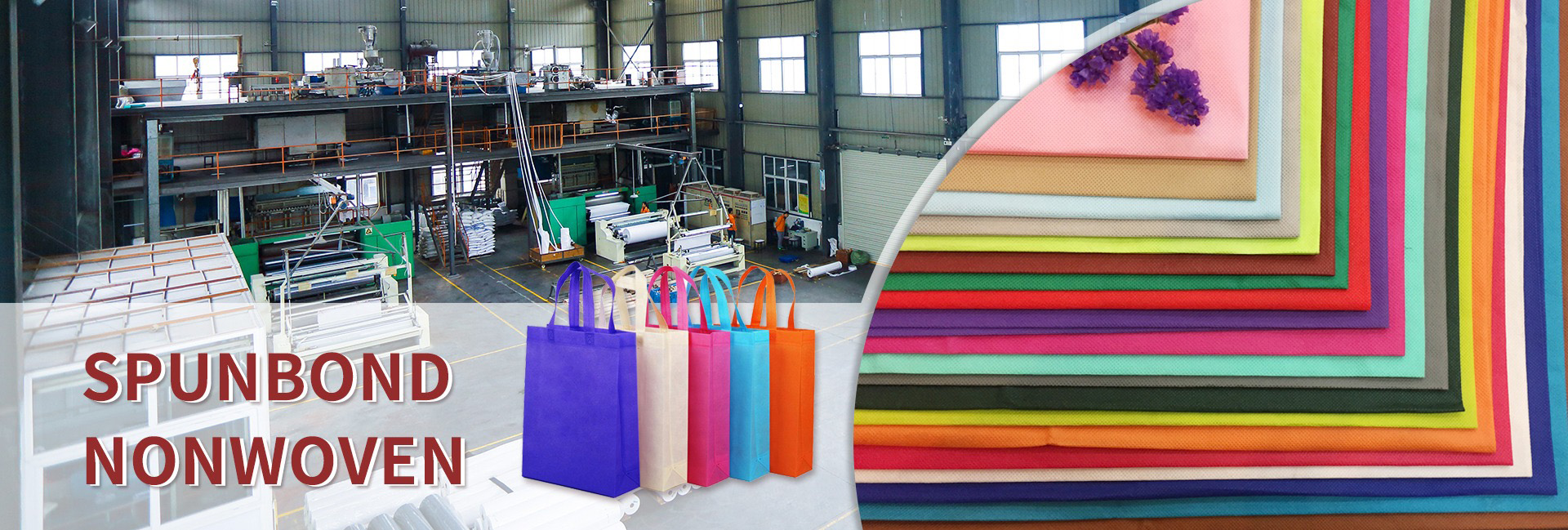
Dongguan Liansheng Non woven Technology Co., Ltd. was established in May 2020. It is a large-scale non-woven fabric production enterprise integrating research and development, production, and sales. It can produce various colors of PP spunbond non-woven fabrics with a width of less than 3.2 meters from 9 grams to 300 grams.
Post time: May-10-2025