
The key to answering the question of “why is the price higher?” lies in shifting from a “procurement cost” mindset to a “full lifecycle safety value” mindset. The high price of fire-resistant non-woven fabric purchases the ability to systematically minimize the risk of fire, which is far from comparable to an ordinary piece of fabric.
The value composition behind its high price
1. Materials and R&D costs
Research and development of special flame-retardant fibers (such as aramid), high-performance flame retardants, and composite materials. Purchase ‘intrinsic safety’: For example, basalt fiber cloth can withstand high temperatures of 1300 ℃, far exceeding ordinary materials on the market. High performance materials are fundamental to safety.
2. Process and technical costs
“Non lotion type” permanent flame retardant process (flame retardant blended into fiber) is more complex than “finishing” process. Purchase ‘Durable and Reliable’: Permanent flame retardant effect, resistant to washing and aging, avoiding unknown risks caused by performance degradation due to flame retardant detachment.
3. Performance and testing costs
To meet strict standards such as GB 20286 and ECE R118, extensive testing of combustion, smoke, and thermal protection performance is required. Purchase ‘Certainty’: Obtain certainty in flame retardancy, low smoke, and droplet resistance in real fire scenes through authoritative testing reports, and strive for critical time for personnel evacuation and property protection.
4. Compliance and certification costs
Meet the mandatory safety regulations of different industries and countries, such as construction, automobiles, and public transportation. Purchasing “admission qualifications” and avoiding legal risks: It is a mandatory pass for products to enter the market, while avoiding legal liabilities and huge compensation that may be faced after a fire caused by the use of non compliant materials.
How to calculate the “safety return on investment” of fireproof nonwoven fabric
You can evaluate whether this’ security investment ‘is cost-effective through a more comprehensive framework:
Step 1: Calculate the explicit ‘risk cost’
If a fire occurs, you need to consider:
Direct loss: The value of property that has been burned.
Indirect losses: business interruption, data loss, and operational losses during the reconstruction period.
Responsibility and Compensation: Compensation for personal injury or death, fines for non-compliance, and legal litigation costs.
Brand reputation loss: difficult to measure in monetary terms, but can be devastating.
Step 2: Quantify implicit ‘safety benefits’
The benefits of using fire-resistant non-woven fabric include:
Risk discount: significantly reducing the probability and severity of the aforementioned “risk cost”, equivalent to purchasing “insurance”.
Improved operational efficiency: Lightweight materials (such as those used in car interiors) can reduce energy consumption and improve energy efficiency.
Long term durability: High performance materials are often more durable, with lower replacement frequency and cost throughout their entire lifecycle.
Brand value enhancement: Demonstrate the importance of safety and social responsibility, and enhance brand image.
Step 3: Conduct a full lifecycle cost comparison
Don’t just compare unit prices, please calculate the following formula:
Total ownership cost of fire prevention plan=(unit price of materials x usage)+installation and maintenance costs – safety benefits – risk discount
Potential total cost of ordinary plan=(unit price of materials x usage)+installation and maintenance cost+(probability of fire occurrence x risk cost)
Through this framework comparison, the true economy of fire-resistant non-woven fabrics is often clearly presented.
Core Decision Suggestions
In summary, the price of fire-resistant non-woven fabric is essentially a payment for deterministic, professional, compliant, and systematic safety guarantees.
Adhere to “on-demand investment”: not all scenarios require top-notch materials. Based on previous discussions, accurately assess your risk level (whether it is decorative flame retardant or life protection), choose products of the corresponding level, and avoid excessive consumption.
Pay attention to technological trends to reduce costs: As demonstrated by breakthroughs in new materials such as basalt fiber, technological advancements are making high-performance fire-resistant materials more affordable. When the budget is limited, attention can be paid to these promising new solutions.
Integrating security into asset management systems: viewing fire-resistant materials as assets that can generate long-term returns and reduce systemic risks, rather than just consumable costs.
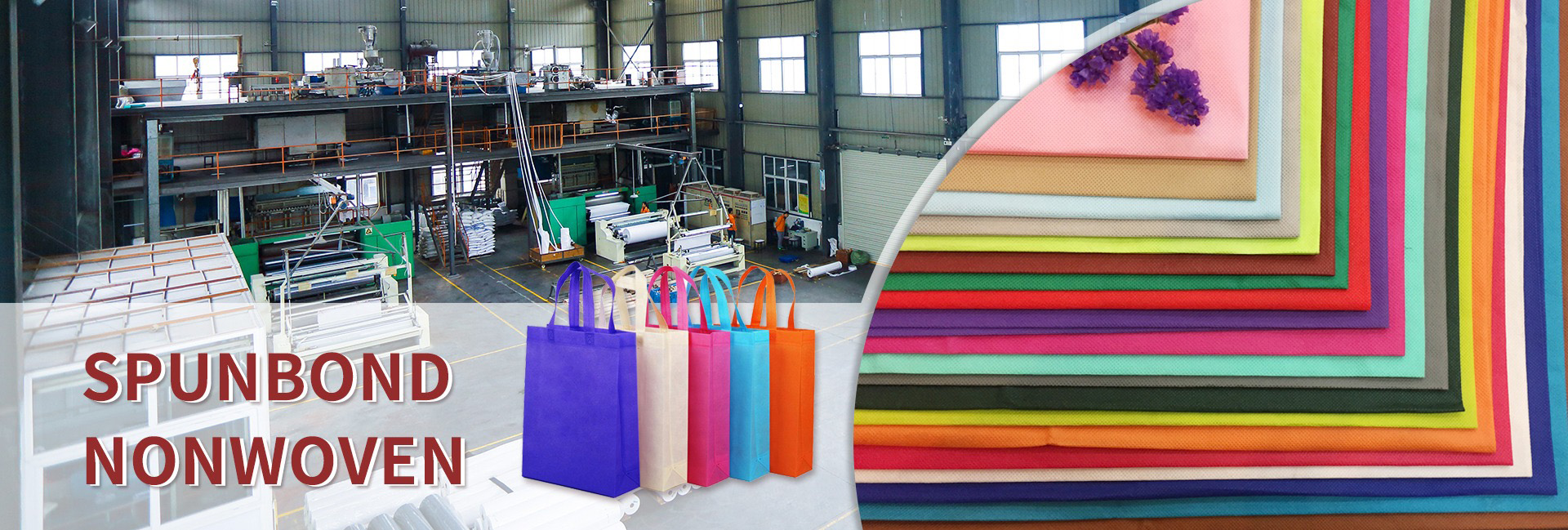
Dongguan Liansheng Non woven Technology Co., Ltd. was established in May 2020. It is a large-scale non-woven fabric production enterprise integrating research and development, production, and sales. It can produce various colors of PP spunbond non-woven fabrics with a width of less than 3.2 meters from 9 grams to 300 grams.
Post time: Dec-16-2025