
Core performance: essential differences in innate attributes
1. Mechanical properties and stability
Polyester spunbond: Made from polyester (PET) as raw material, the tensile strength can reach 1.5-2 times that of polypropylene, with a longitudinal and transverse strength difference of less than 5%, and a strength retention rate of over 90% in wet state, suitable for long-term stress scenarios. Its light resistance is second only to acrylic fiber, and after 1000 hours of exposure to sunlight, its strength can still be retained by 60-70%. Its outdoor service life can reach more than 5 years.
Polypropylene spunbond: The density of polypropylene (PP) material is only 0.91g/cm ³, making it the lightest category among common chemical fibers. The thickness of products with the same weight is 30% higher than polyester, and the fluffiness is better. But it has poor thermal stability, softening at 70-80 ℃ and melting deformation above 150 ℃. It also has weak aging resistance and is prone to brittleness when used outdoors without UV treatment.
2. Chemical and Environmental Tolerance
Polyester spunbond has a long-term temperature resistance range of 260 ℃ and a short-term temperature range of 300 ℃. It is chemically resistant, acid resistant, and non alkali resistant, with a moisture absorption rate of less than 0.5%. It is antibacterial, moth proof, and mold proof.
Polypropylene spunbond has a long-term temperature resistance range of 120 ℃ and a short-term temperature range of 150 ℃. It is resistant to chemicals, acids, alkalis, and most organic solvents, with a moisture absorption rate of ≈ 0%. It has excellent core absorption and antibacterial properties, isolating bacterial erosion and achieving better antibacterial properties.
3. Functional adaptability
Polyester spunbond: High density can be achieved through hot rolling reinforcement, and the air permeability can be controlled between 50-500L/m ² · s, suitable for filtering materials; Polypropylene spunbond: Natural water repellent (contact angle > 130°), can be used for the surface of sanitary products after hydrophilic modification, with a core suction speed of 0.3cm/s.
Process characteristics: technological differentiation at the production end
1. Comparison of core spinning parameters
Polyester spunbond spinning temperature is 285-290 ℃, drawing speed is 4000-6000m/min, screw aspect ratio must be ≥ 27, raw material pretreatment must be dry (moisture content<0.05%);Polypropylene spunbond spinning temperature is 220-295 ℃, drawing speed is about 2000m/min, screw length diameter ratio is 25-27 compared to conventional, and raw material pretreatment does not require drying
2. Equipment and Cost Control
Polyester spunbond: requires specialized drying equipment, with energy consumption 15-20% higher than polypropylene, but the finished product has higher weight accuracy (± 2g/m ²); Polypropylene spunbond: compatible with 30% recycled material addition, equipment investment is 10-15% lower, and high-frequency hot melt processing efficiency is 30% higher than polyester.
Application scenario: demand-oriented selection logic
1. Division of dominant application areas
The preferred choice for medical protection is polypropylene spunbond (SMS structure), which has strong antibacterial and non-toxic properties, and a filtration efficiency of over 95%.
Polyester spunbond is preferred for industrial filtration due to its high temperature resistance, stable size, and ability to be cleaned repeatedly.
The preferred choice for agricultural coverage is polypropylene spunbond (UV resistant), with the core reason being that polypropylene spinning has light viscosity, low cost, and can naturally degrade within 1-5 years.
The preferred choice for car interiors is polyester spunbond, with the core reason being its aging resistance, good sound insulation, and long-term resistance to high temperatures up to 120 ℃.
The preferred choice for hygiene products is polypropylene spunbond, with the core reason being that the polypropylene spunbond core has fast absorption, water repellent properties, and a soft touch.
2. Typical case analysis
Medical surgical gown: made of 30g/m ² polypropylene SMS composite fabric, treated with anti alcohol and anti plasma properties, with a moisture permeability of>2000g/m ² · 24h;High temperature filter bag: Made of 200g/m ² polyester spunbond fabric and coated with PTFE film, it can be used continuously for 18 months at 200 ℃; Grass proof fabric: 60g/m ² UV resistant polypropylene spunbond fabric, with a transverse tear strength greater than 80N, and a service life of up to 3 years.
Economy and Market Pattern
1. Cost composition comparison (taking 80g/m ² product as an example)
Raw material cost: Polyester chips (8500 yuan/ton) vs polypropylene chips (7200 yuan/ton), with polypropylene chips being 15.3% lower; Processing cost: Polyester (1.2 yuan/m ²) vs Polypropylene (0.9 yuan/m ²), Polypropylene is 25% lower; Comprehensive cost: Polypropylene spunbond is 18-22% lower than polyester.
2. Market share and trends
In the global spunbond nonwoven fabric, polypropylene accounts for about 70% and polyester accounts for 18%; In the medical field, the proportion of polypropylene SMS structure production capacity has increased from 12% in 2020 to 37.6% in 2024, and is expected to exceed 48% by 2025; In the industrial field, polyester spunbond has achieved an annual growth rate of 8.2% in the high-temperature filtration market due to performance upgrades.
Environmental Protection and Sustainable Development
Recycling: Both are thermoplastic materials. Polyester recycling requires high temperature melting (high energy consumption), while polypropylene recycling requires low temperature (30% energy saving). However, the strength retention rate of recycled polyester is 85%, which is better than that of recycled polypropylene (70%);
Degradation characteristics: Polypropylene can achieve natural differentiation for 1-5 years by adding degradation masterbatch, while polyester requires specific enzymatic hydrolysis conditions with a degradation cycle of over 20 years;
Carbon footprint: Polypropylene production emits approximately 3.2 tons of CO ₂ per ton, which is lower than polyester (5.1 tons of CO ₂).
Ultimate Choice Guide
Priority should be given to polypropylene spunbond: when the demand is for low cost, lightweight, water repellent, disposable (such as masks, hygiene products, temporary protection);
Priority should be given to polyester spunbond: when the demand is for high strength, high temperature resistance, aging resistance, and long-term use (such as industrial filter materials, outdoor building materials, and automotive interiors);
Special scenarios: Choose polypropylene SMS composite for high-end medical protection, polyester film for high-temperature filtration, and UV resistant polypropylene for long-term agricultural coverage.
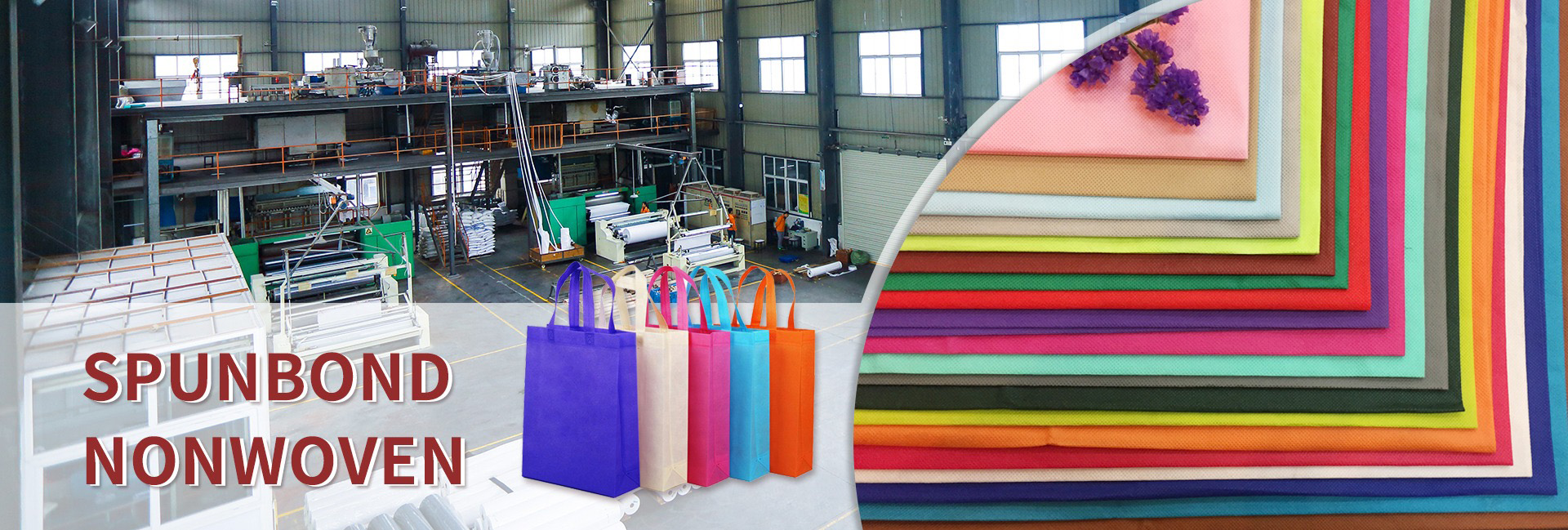
Dongguan Liansheng Non woven Technology Co., Ltd. was established in May 2020. It is a large-scale non-woven fabric production enterprise integrating research and development, production, and sales. It can produce various colors of PP spunbond non-woven fabrics with a width of less than 3.2 meters from 9 grams to 300 grams.
Post time: Sep-23-2025