
Policy efforts are needed for the recycling and reuse of waste textiles
The Environmental Resources Department of the National Development and Reform Commission recently held a symposium with relevant departments to study policy measures to promote the comprehensive utilization of waste textiles in China. Li Jing, Deputy Director of the Environmental Resources Department, introduced the relevant situation of work promotion and pilot demonstration project construction at the meeting. She introduced that the recycling and utilization of waste textiles is a systematic project involving multiple departments and industry associations, with complex links that are also related to the lives of social residents. Li Jing proposed that it is necessary to design policy mechanisms well, give full play to the guiding role of government departments, and promote them in an orderly manner according to market-oriented principles.
At present, many wealthy families in urban areas have stored some unused clothes. Guided by the concept of circular economy, the goal is to achieve efficient, high-value, and circular utilization of waste textiles in the whole society. We need to coordinate planning and systematic layout to promote the comprehensive utilization of waste textiles in China. According to a study conducted by BIR (an international recycling organization) at the University of Copenhagen in Sweden in 2008, the use of 1kg of waste textiles can reduce 3.6kg of carbon dioxide emissions, save 6000L of water, and reduce the use of 0.3kg of fertilizers and 0.2kg of pesticides. Therefore, the large-scale recycling and use of waste textiles significantly reduces carbon dioxide emissions compared to the processing and production of raw materials.
The recycling and utilization of waste textiles in China is still in its early stages
Overall, the recycling and utilization of waste textiles in China is still in its early stages, “said Sun Huaibin, Deputy Director of the Environment and Resources Committee of the China Textile Industry Federation, in an interview with China Economic Herald.” On the one hand, there is a shortage of raw materials. Due to China’s textile processing scale being larger than its own raw material supply, it needs to import fiber materials from abroad, which creates a certain supply gap. On the other hand, the utilization of waste textiles is far from sufficient, creating a huge contrast, which presents us with a severe and challenging task in adjusting the raw material structure.
A 2012 data from the national statistical department showed that the total amount of waste textiles generated in China each year is about 24 million tons, and less than 0.03% can be recycled. According to Tang Shijun, Deputy Secretary General of the Industrial Technology Innovation Strategic Alliance for Comprehensive Utilization of Waste Textiles, the stock of waste textiles in China was about 26 million tons in 2013, including 18 million tons of chemical fibers and 8 million tons of natural fibers. Moreover, the sales and recycling of waste textiles are still very low.
At the same time, the import volume of textile raw materials in our country has reached over 65%. Fiber production enterprises are struggling to meet the demand for raw materials, yet they have to import “foreign garbage” from overseas, highlighting the urgency of recycling and reusing waste textiles in our country.
Xiong Xiaokun, a light industry researcher at China Investment Consulting Group, explained in an interview with China Economic Herald that “the main reason for this huge contrast phenomenon is that waste textiles have not been fully utilized. If waste textiles are utilized, it will effectively alleviate the pressure on raw materials in the textile industry. Especially in some fields such as automotive materials and building materials, which have lower requirements for textile quality, they can become the main flow of waste textiles. Currently, China urgently needs to strengthen the construction of a waste textile recycling system.
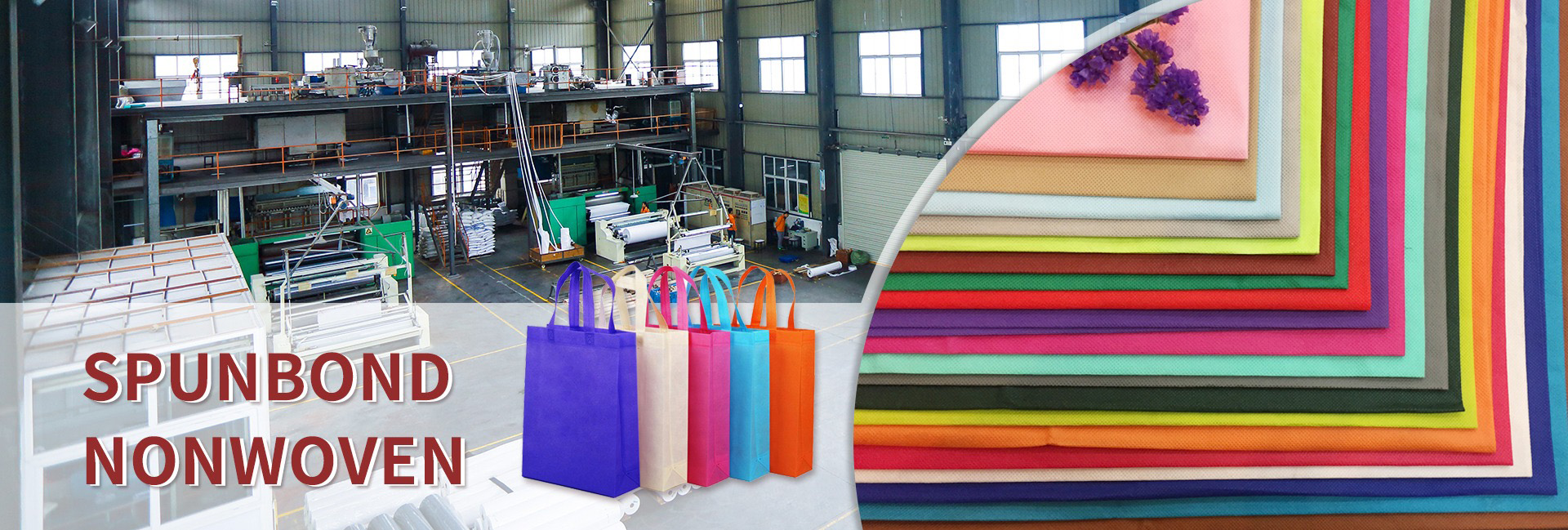
Dongguan Liansheng Non woven Technology Co., Ltd. was established in May 2020. It is a large-scale non-woven fabric production enterprise integrating research and development, production, and sales. It can produce various colors of PP spunbond non-woven fabrics with a width of less than 3.2 meters from 9 grams to 300 grams.
Policy efforts are needed for the recycling and reuse of waste textiles
The Environmental Resources Department of the National Development and Reform Commission recently held a symposium with relevant departments to study policy measures to promote the comprehensive utilization of waste textiles in China. Li Jing, Deputy Director of the Environmental Resources Department, introduced the relevant situation of work promotion and pilot demonstration project construction at the meeting. She introduced that the recycling and utilization of waste textiles is a systematic project involving multiple departments and industry associations, with complex links that are also related to the lives of social residents. Li Jing proposed that it is necessary to design policy mechanisms well, give full play to the guiding role of government departments, and promote them in an orderly manner according to market-oriented principles.
At present, many wealthy families in urban areas have stored some unused clothes. Guided by the concept of circular economy, the goal is to achieve efficient, high-value, and circular utilization of waste textiles in the whole society. We need to coordinate planning and systematic layout to promote the comprehensive utilization of waste textiles in China. According to a study conducted by BIR (an international recycling organization) at the University of Copenhagen in Sweden in 2008, the use of 1kg of waste textiles can reduce 3.6kg of carbon dioxide emissions, save 6000L of water, and reduce the use of 0.3kg of fertilizers and 0.2kg of pesticides. Therefore, the large-scale recycling and use of waste textiles significantly reduces carbon dioxide emissions compared to the processing and production of raw materials.
Post time: Apr-15-2025